INRTU Student Aleksandr Koval Presents at the International Youth Scientific Symposium “Problems of Geology and Subsurface Development”
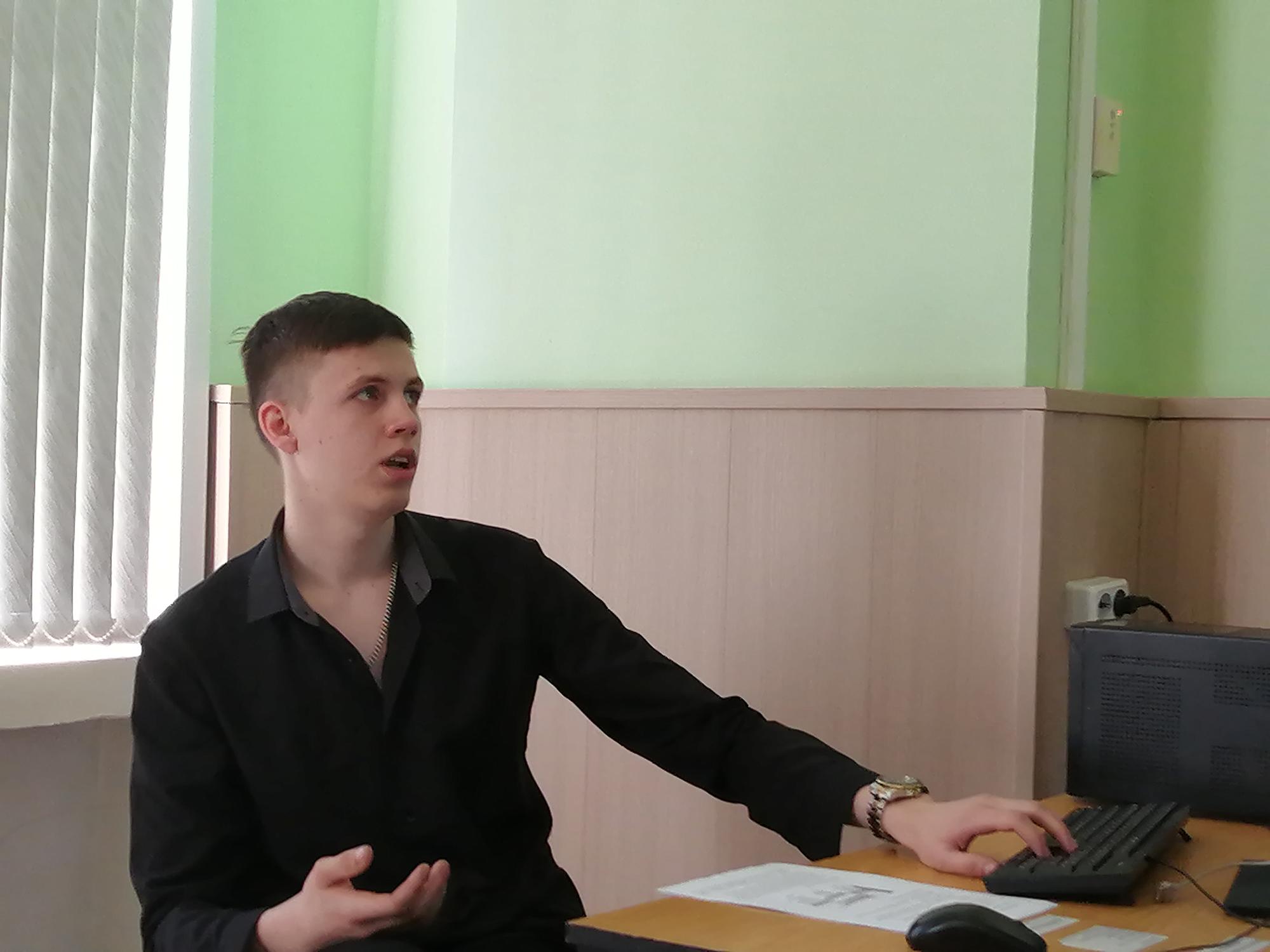
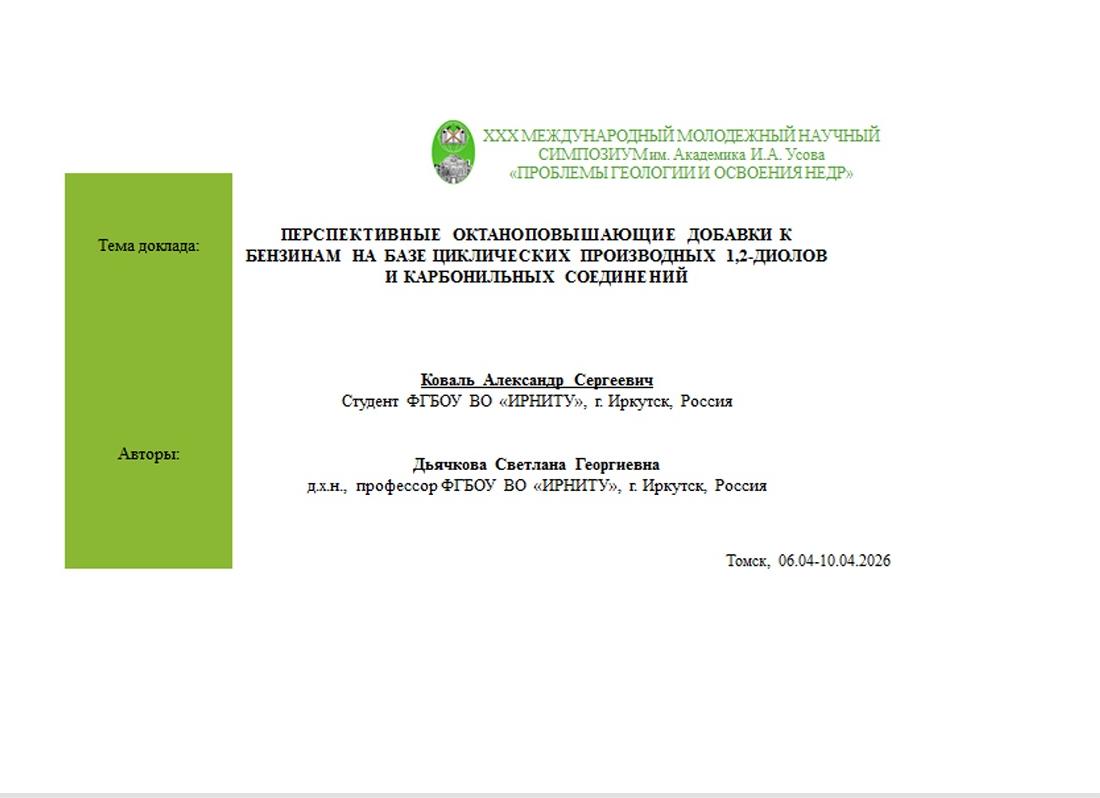
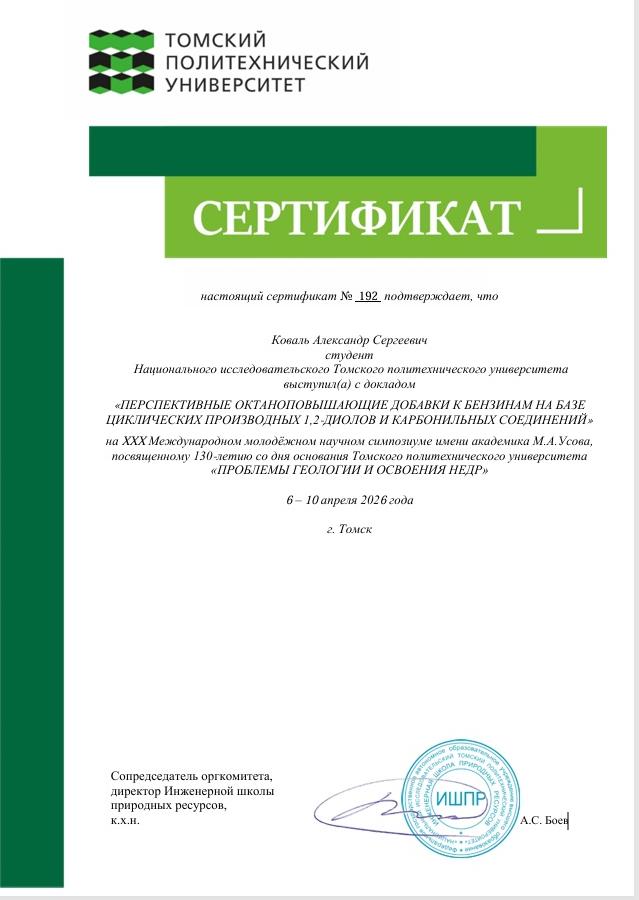
INRTU student Aleksandr Koval delivered an oral presentation at the International Scientific Symposium in honor of Academician M.A. Usov “Problems of Geology and Subsurface Development”, which was dedicated to the 130th anniversary of Tomsk Polytechnic University.
The organizing committee highly praised the INRTU student's report, titled “Promising Octane-Boosting Additives for Gasoline Based on Cyclic Derivatives of 1,2-Diols and Carbonyl Compounds”. His research advisor is Professor Svetlana Diachkova.
The research findings were presented in the symposium's traditional section, “Chemical Technology of Preparation and Processing of Hydrocarbon Resources”. This underscores the critical importance of this field and its development for the efficient exploitation of subsurface resources.
Professor Svetlana Diachkova noted that Aleksandr Koval has been engaged in research at the Department of Chemical Technology named after N.I. Yaropolov for two years and is a regular participant in conferences at the School of High Technologies.
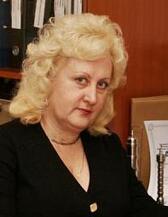
“The work presented at the competition was conducted jointly with Master's student Andrey Lapkanov as part of his thesis, which he successfully defended last year. He now works for Rosneft Oil Company. In this project, Aleksandr Koval created fuel compositions, performed all chemotological analyses, investigated the antiknock activity of the fuel blends, and developed the process flow diagram. He is a hardworking and knowledgeable student and a graduate of the Irkutsk Oil Company class.
It is my sincere hope that talented students like Andrey Lapkanov and Aleksandr Koval will continue their studies at our university, enrolling in postgraduate and master's programs, respectively,”
Svetlana Diachkova emphasized.
In his presentation, Aleksandr Koval noted that multifunctional additives for motor fuels are typically mixtures of compounds with various targeted properties. The most common are oxygenate additives for gasoline, which include alcohols, acetals, and ethers. Cyclic acetals are widely used in the synthesis of natural products as protecting groups for ketones, aldehydes, and diols.

“Due to the rapid development of organic synthesis, cyclic acetals have transitioned from being relatively rare compounds to materials with a wide range of useful properties. They have gained particular significance due to their potential use in motor fuel compositions to improve octane characteristics, increase phase stability, and reduce exhaust gas toxicity.
For instance, glycerol ketal additives improve the properties of both gasoline and diesel fuel, and its binary mixtures with ethanol are comparable in their octane-boosting ability to the widely used fuel oxygenate methyl tert-butyl ether.
Our work is dedicated to finding practical applications for cycloacetals and developing methods for their production from affordable domestic raw materials on a small-scale chemistry level,”
Aleksandr Koval stated.
As a result of the research, a basic process flow diagram was proposed, which provides for the production of cycloacetals in a batch mode using standard equipment.
Thus, the researchers demonstrated that cycloacetals synthesized from industrially available diols and carbonyl compounds are promising octane-boosting additives for motor fuels, and they developed a basic process flow diagram for producing these compounds.