INRTU Scientists Complete Research Internships in China (Priority 2030 Program)
In 2025, INRTU sent four researchers to leading Chinese universities and research centers to enhance their skills and broaden partnership opportunities. Vice-Rector for International Affairs Stepan Bykov announced this during a meeting of the University's Scientific and Technical Council for the Priority 2030 program.
The university's development program for 2025-2036 outlines four strategic development goals, including internationalization. This is positioned as a driver of global competitiveness and sustainable development, securing the university's leadership in engineering sciences. INRTU aims to earn at least 400 million rubles from international activities by 2030.
Vice-Rector for International Affairs Stepan Bykov noted that developing academic mobility strengthens the university's research potential through international collaborations. This involves funding research internships at top-tier foreign universities, supporting co-authored publications with international colleagues in highly ranked journals (Q1-Q2 Scopus/WoS), and participating in grant programs.
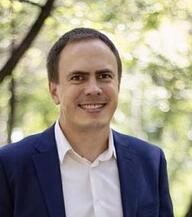
“We expect that these publications, contacts, and international visits will give colleagues a competitive edge when applying for Russian Science Foundation (RSF) grants involving China, India, and so on. A condition of our support is a practical outcome, meaning a connection to specific industry partners. In 2025, INRTU had four such projects. We supported them with co-financing from the Priority 2030 program,”
said Stepan Bykov.
Three of the projects involved the work of staff from the Department of Mineral Processing and Environmental Protection named after S.B. Leonov. For example, in September, Associate Professor Aleksandr Burdonov and graduate students Tatyana Sakhabutdinova and Wang Aiqing spent two weeks on an internship at the Inner Mongolia University of Science and Technology in Baotou. While in China, they represented the interests of the INRTI Flotation and Reagent Chemistry Laboratory.
Together with their Chinese colleagues, the Irkutsk researchers conducted flotation experiments on columbite and bastnaesite, minerals that are sources of rare earth metals. The work of the interns at the Chinese university was supervised by Professor Zhao Cao.
The experience gained in fundamental research in China will be adapted by INRTU scientists for applied projects to benefit Russian mining and processing companies.
Following the trip, Aleksandr Burdonov and graduate student Wang Aiqing published an article in English in the Chemical Engineering Journal (Q1, Scopus). The co-authors included representatives from the university in Baotou. The article focuses on the beneficiation of bastnaesite for the extraction of rare earth metals, with applications in renewable energy, electronics manufacturing, and other high-tech industries. The paper details experiments conducted on bastnaesite sourced from the Weishanhu mine in Shandong Province.
An article by Tatyana Sakhabutdinova is also currently being prepared for publication.
Furthermore, the Head of the Department of Power Supply and Electrical Engineering, Vladislav Shakirov, completed an internship at Harbin Institute of Technology in 2025. His work was supervised by Professor Ying Xu, whose research interests include the planning, development, and operational management of power systems.
“We are actively working to develop cooperation between INRTU, Harbin Institute of Technology, and the En+ Group holding in the field of green energy. A scientific article by Vladislav Shakirov is currently in preparation,”noted Vice-Rector Stepan Bykov.
He emphasized that the selection process for research internships is systematic. First and foremost, candidates must submit an application along with a letter of consent from the host institution to the Department for International Scientific and Educational Projects. Priority for financial support is given to faculty members. However, PhD and master's degree students also have opportunities to conduct research abroad.