“The Living Russian Word” Recitation Contest for International Students at INRTU
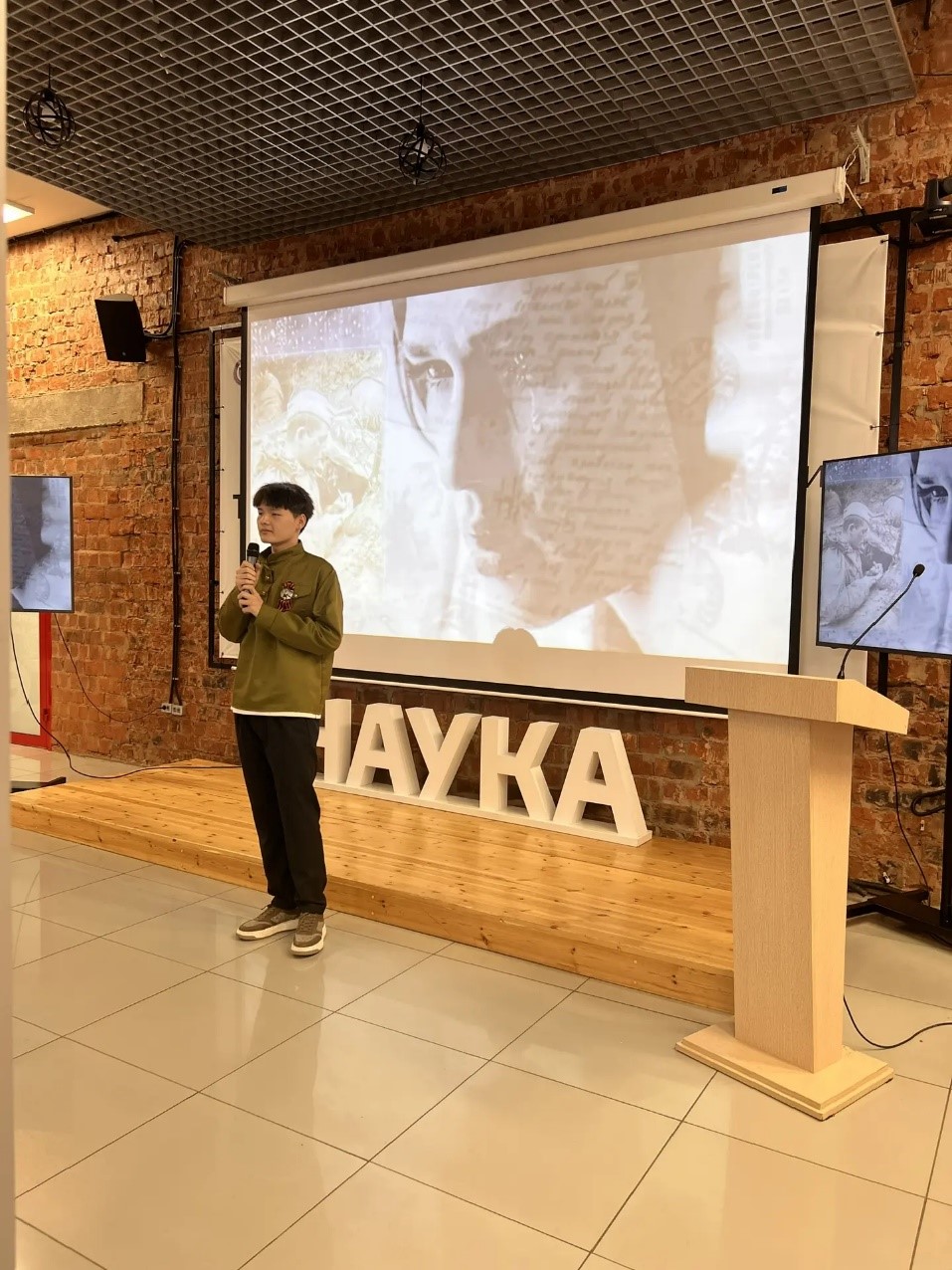
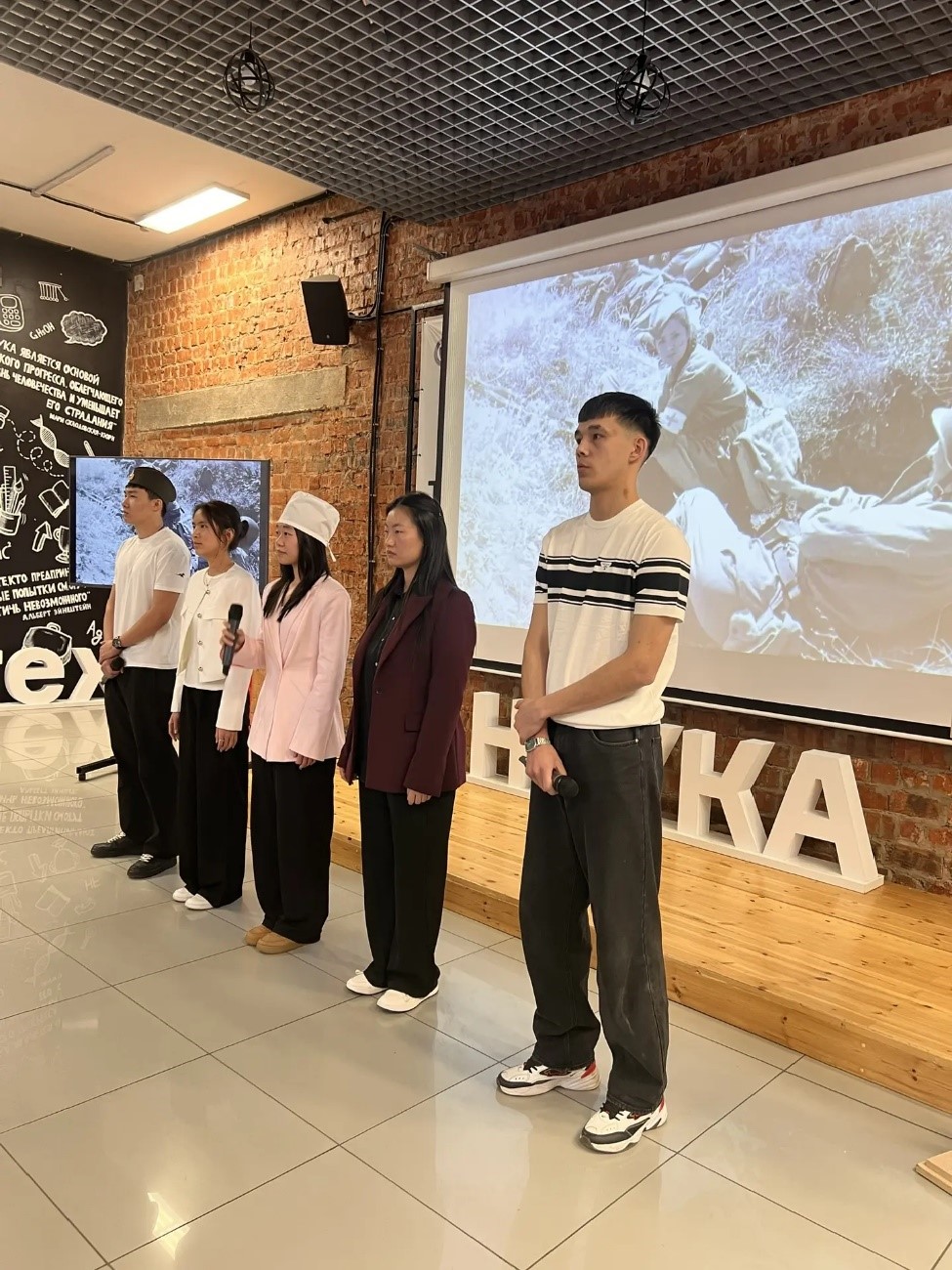
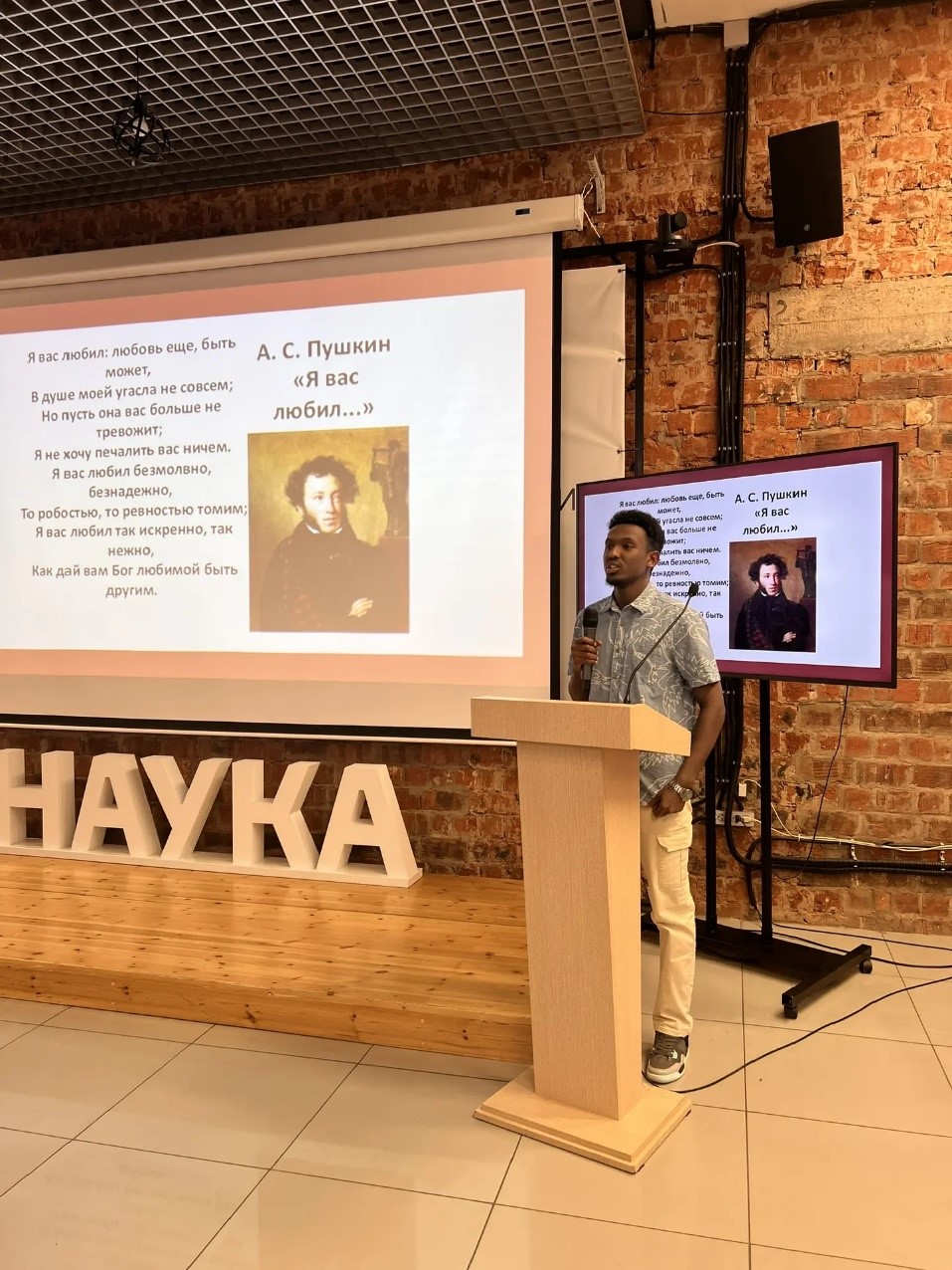
Irkutsk National Research Technical University hosted the “Living Russian Word” Russian poetry recitation contest, organized by the School of Linguistics and Intercultural Communication. The event drew interest from around 40 international students representing various countries and Irkutsk universities. Contestants performed works by renowned Russian classics and contemporary authors on a wide range of themes, showcasing not only their command of the language but also a deep understanding of Russian history and culture.
Applications were submitted by students from China, the DPRK, Somalia, Mongolia, Cameroon, and other countries. In addition to INRTU students, the contest welcomed participants from the East-Siberian Institute of the Ministry of Internal Affairs of Russia, Irkutsk State Agrarian University, and the International Institute of Economics and Linguistics of Irkutsk State University.
The contest featured not only poetry but also prose and vocal performances. The international students paid special attention to works dedicated to the events of the Great Patriotic War, the courage of soldiers, and the memory of fallen heroes.
Lines by Konstantin Simonov, Alexander Tvardovsky, Robert Rozhdestvensky, and Yulia Drunina filled the hall – poets whose work has become a symbol of courage and remembrance. The participants' performances proved that the power of the poetic word knows no boundaries – neither temporal nor national.
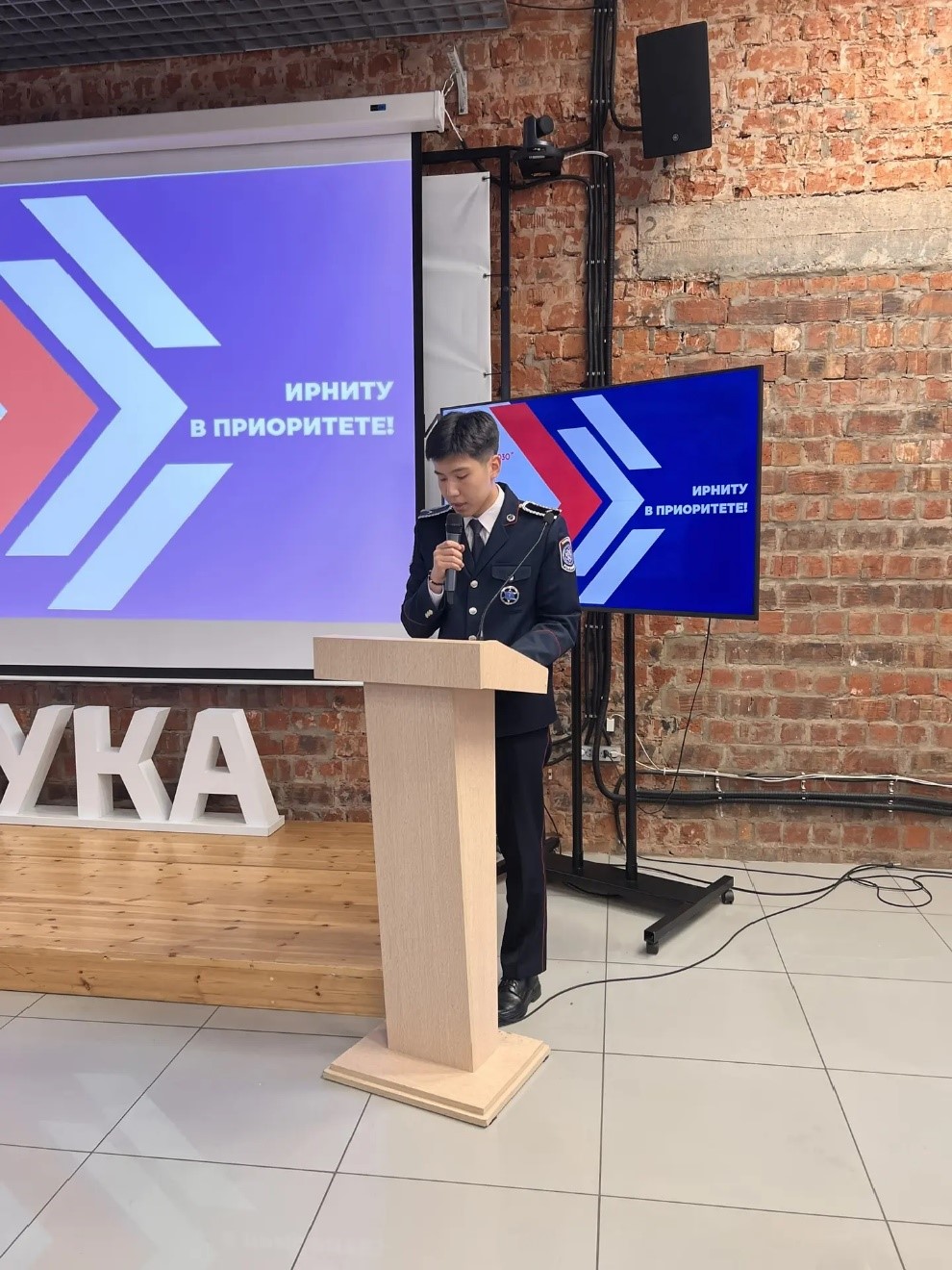
The winner, for a moving monologue “I am a Birch” (A. Green, Yu. Tseitlin) that revealed the image of a Russian girl with the call-sign “Birch”, was Battulga Darkhan Batnyam, a cadet of the East-Siberian Institute of the Ministry of Internal Affairs of Russia. Second place was awarded to Wang Jiawen, a student of the Preparatory Faculty for Foreign Citizens at the International Institute of Economics and Linguistics of Irkutsk State University, for a heartfelt reading of Konstantin Simonov's poem “Wait for me”. Third place went to Ho Jun Hyok, a first-year student at the INRTU School of High Technologies, for a performance honoring the memory of the defenders of Stalingrad and the DPRK Special Forces fighters who took part in the liberation of the Kursk Oblast in 2024.
A particularly warm response from the audience was drawn by the artistic rendition of Ivan Krylov's fable “The Crow and the Fox” by INRTU student Tsague Souna Junior. A participant from Irkutsk State Agrarian University, Narantuya Michidmaa, who read an excerpt from Robert Rozhdestvensky's poem “Requiem”, amazed the jury and the audience with the complexity of her chosen piece.
The contest was organized by Associate Professors Natalia Kirichenko and Olesia Polonskaia from the Department of Foreign Languages No. 2 of the School of Linguistics and Intercultural Communication.

“This year's participants amazed me with their maturity and depth. Russian poetry is extremely difficult for foreigners – it requires not only correct intonation but also inner understanding and empathy. And the students rose to the challenge. Many read in such a way that a hush fell over the hall, and the audience was moved to tears. It was especially valuable that the students didn't just memorize the text but truly let it pass through them. The language barrier disappears when genuine feeling speaks. The contest proved that the Russian word is alive and touches the hearts even of those who grew up in a different cultural tradition,”
Natalia Kirichenko shared.
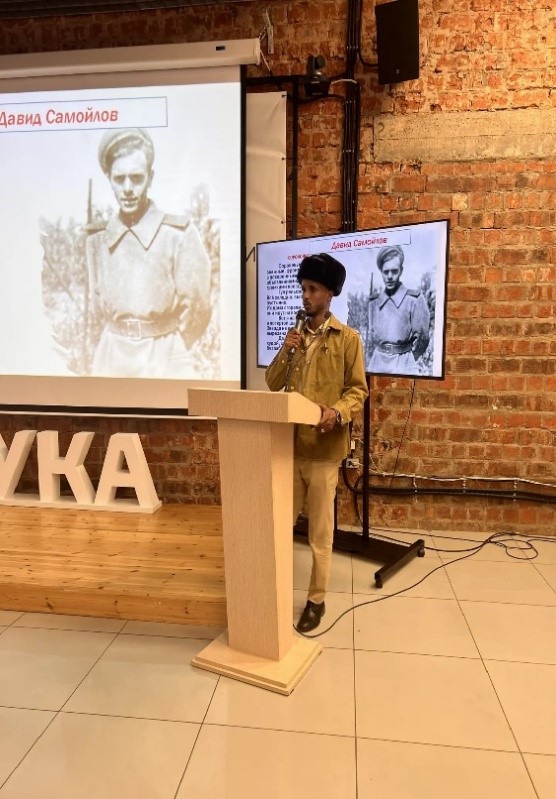
One of the contestants was Said Ahmed Omar. A student from Somalia studying at the East-Siberian Institute of the Ministry of Internal Affairs of Russia, he described his experience:
“For me, the Russian language is the language of Victory. When I was learning David Samoilov's poem ‘The Forties’, I thought about how war is a common pain for all peoples. It was nerve-wracking to perform in front of the jury and the audience, but I felt the support of the hall. The contest helped me not only improve my pronunciation but also truly understand the soul of Russian poetry. I am grateful to the organizers for the opportunity to touch the great word”.
The main outcome of the contest was that all participants, regardless of awards, gained invaluable experience of living interaction with the Russian word and with each other. The “Living Russian Word” contest proved that literature knows no borders and that historical memory unites people regardless of their nationality or mother tongue. We congratulate the winners and thank all participants for their bright, heartfelt performances and their respectful attitude toward Russian culture.