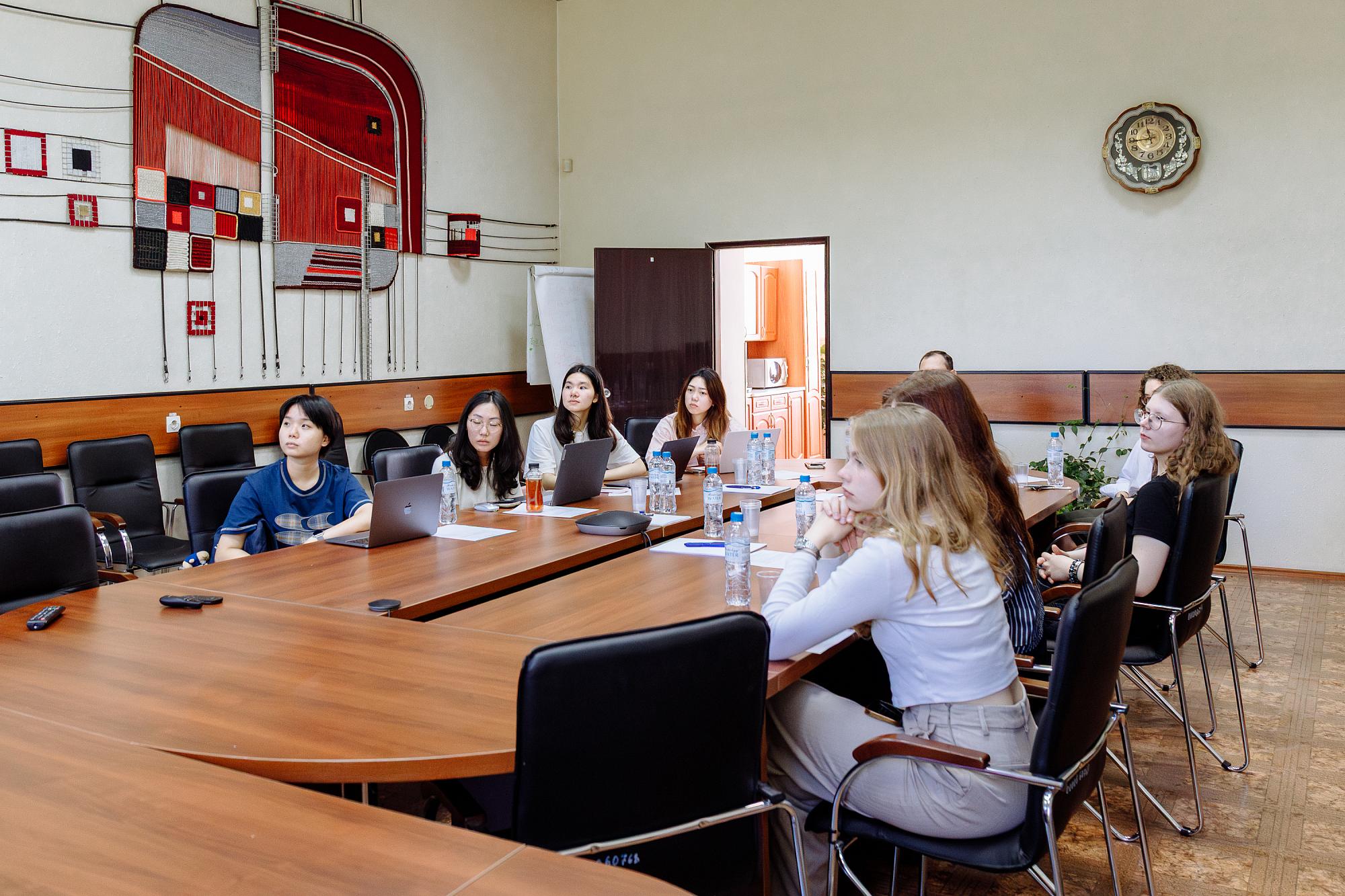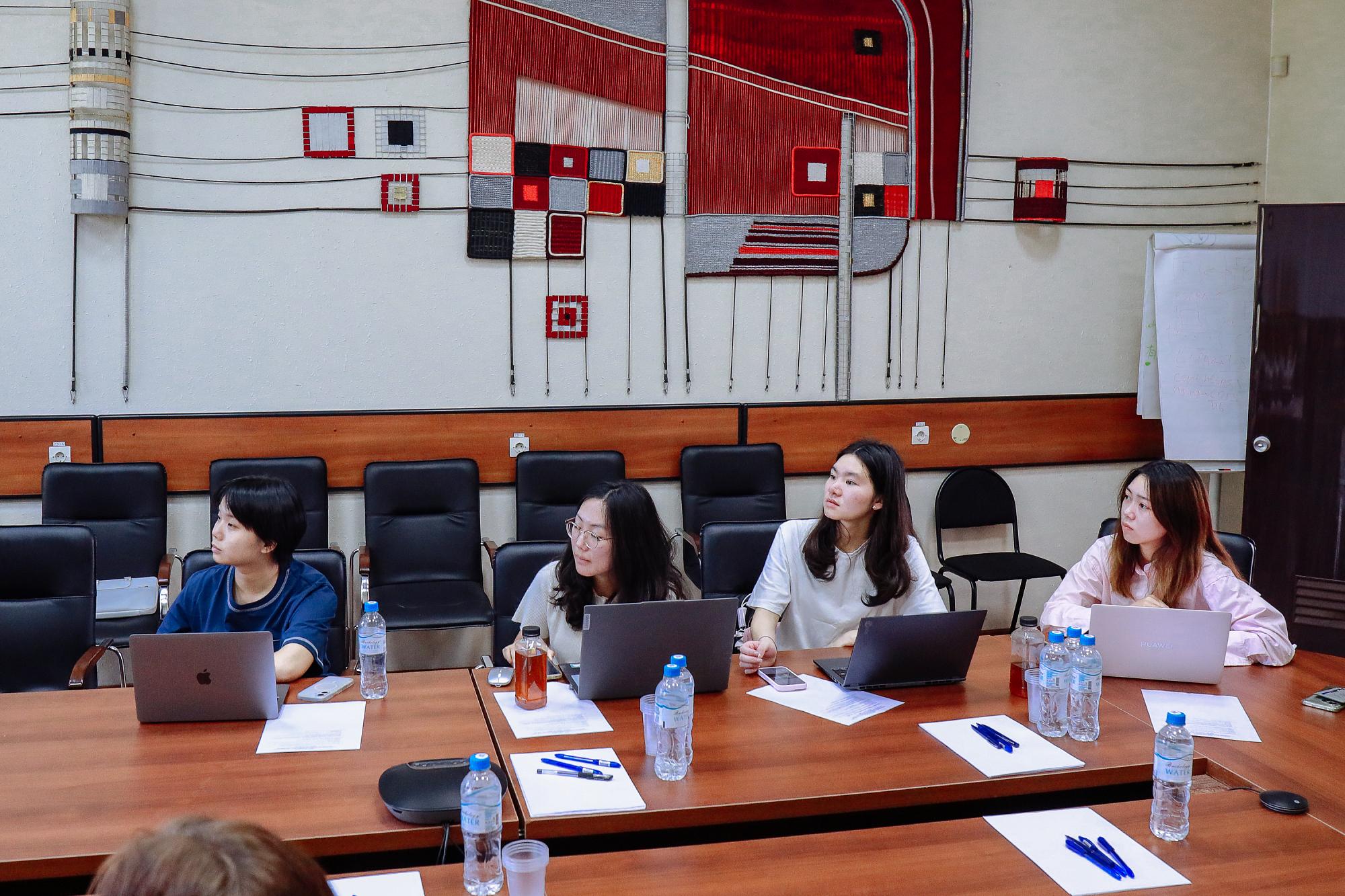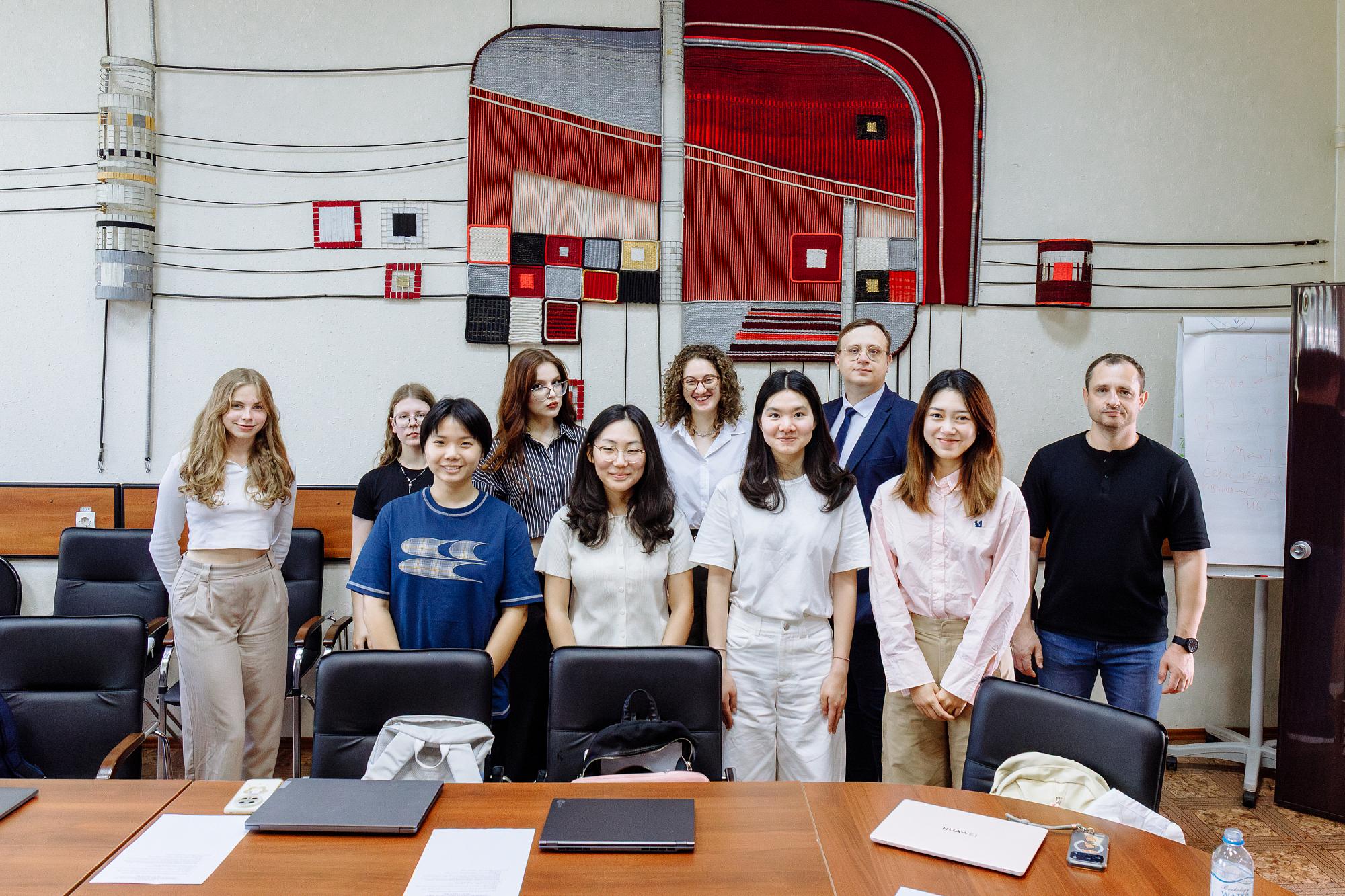
Students from Hangzhou are completing their practical training at INRTU
Linguistics students from Zhejiang International Studies University (Hangzhou, China) have arrived at INRTU for practical training. They will be working on a Russian-Chinese research project on the spatial development of Siberia.
It should be recalled that earlier INRTU and Zhejiang International Studies University (ZISU) signed a memorandum of cooperation and an agreement on the establishment of a joint research platform. On the INRTU side, the core of the project consists of Alexey Levashev, Technical Director of the Transport Laboratory Research and Development Unit; Irina Biankina, Head of the Baikal Technology Transfer Center and a postgraduate student; and Ilia Kruchinin, Deputy Director for Foreign Affairs of Baikal School of BRICS. The Chinese team is led by Professor Chen Xi.
In early July, an INRTU delegation visited Hangzhou to participate in the Summer School. The students who have now arrived on a return visit – Chen Yangyang, Zhao Yanger, Xu Jiamiao, and Xu Zimo – will conduct in-depth studies on the effectiveness of investments for the development of Eastern Siberia as a transport corridor between Russia and China.
As noted by Associate Professor Alexey Levashev, the practical training is closely related to the fields of transport, macroeconomics, and geopolitics.

"In the future, Siberia will either become a place of development or a transit zone. In both cases, our field of transport plays a major role. Professor Chen Xi is interested in this project as a means of studying the investment attractiveness of Siberia's transport infrastructure, the role of the Russian Government in the region's development, and the readiness of Siberians to invest. It is gratifying that our team is growing. We have been joined by future transport specialist Arina Shvetsova and Baikal School of BRICS students Yulia Belusiak and Maria Lukyanova. Together with our Chinese colleagues, we are addressing a very complex issue. This means that the final result may turn out to be unique," said Alexey Levashev.
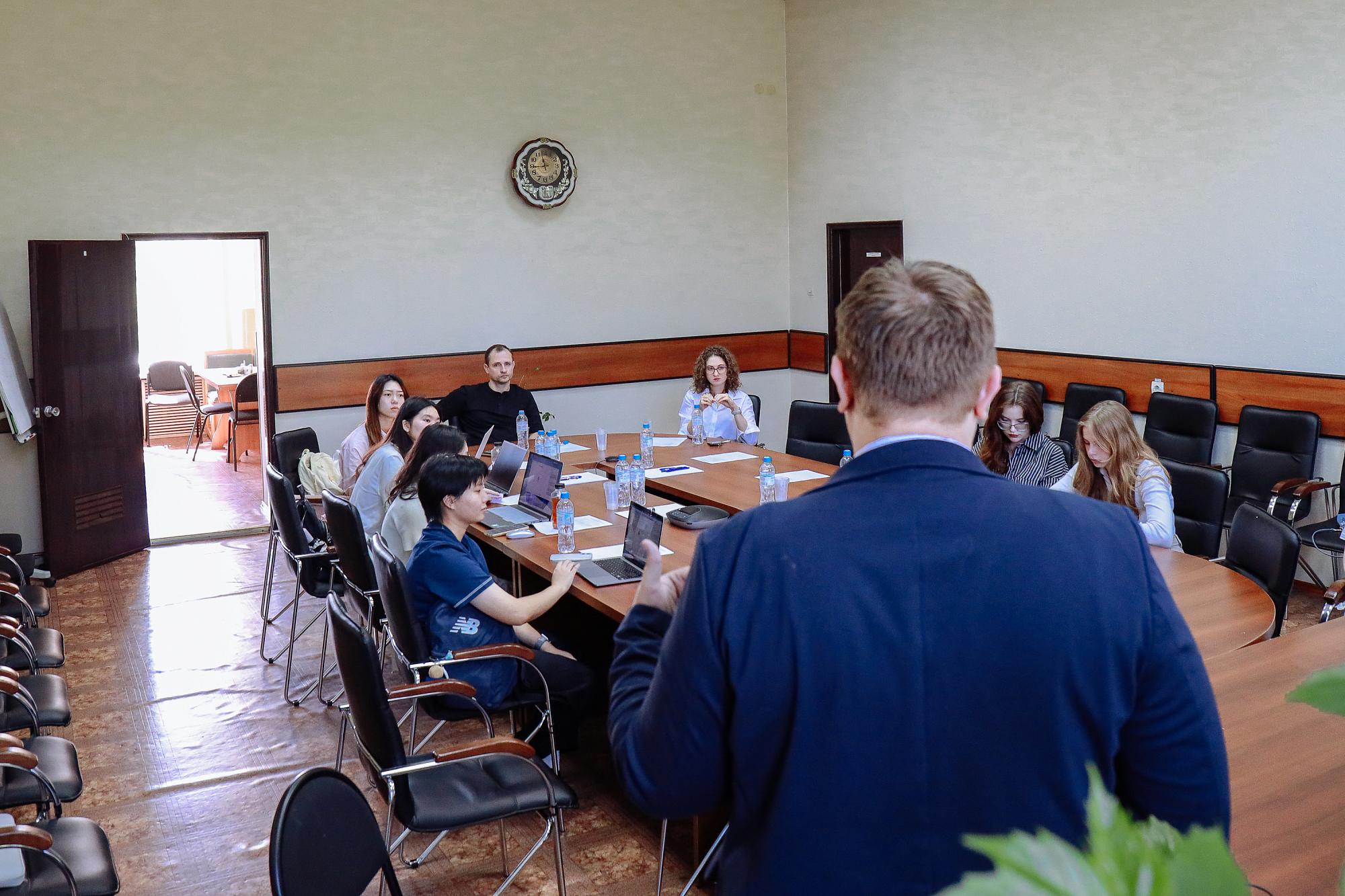
The visit of the Chinese students to Irkutsk began with an English-language lecture by Ilia Kruchinin. He spoke about the main stages of Russia's development, with a focus on Siberia. The speaker emphasized that the macro-region being studied by the trainees stretches from the Ob Basin to the Pacific coast, bordering Mongolia and China to the south. Geographically, the territory is divided into the western part of Siberia and the entirety of Eastern Siberia, as well as the Russian Far East. Approximately 20 million people live here.

The exploration of the macro-region began in 1582, when Cossacks under the leadership of Yermak took Kashlyk – the capital of the Siberian Khanate on the banks of the Irtysh. Approximately 60 years later, Russian troops reached the Pacific Ocean. The main purpose of the Cossack campaign was the harvesting of furs. During the lecture, the speaker touched upon the founding of Siberian cities. The first to appear were Yeniseisk, Yakutsk, and Okhotsk. The Irkutsk ostrog on the Angara was founded in 1661. The audience also learned about key events concerning the beginning of relations between Russia and China. In 1689, the Treaty of Nerchinsk was signed, which enabled Russia to conduct caravan trade with China. New borders between the countries were established by the Treaty of Kyakhta in 1727. An important milestone in cooperation was the Treaty of Beijing in 1860, which confirmed the Ussuri region as part of the Russian Empire.
In addition, the lecturer spoke about the extraction of gold and hydrocarbons in Siberia, the construction of hydroelectric power plants on the Angara and Yenisei, and the development of the economy during the perestroika years. Concluding the lecture, Ilia Kruchinin gave the Chinese students a week-long assignment. He suggested that they conditionally divide Siberia into four zones and find historical information to plot on a digital map. At the same time, the trainees will learn to work with the QGIS geographic information system.
The result of their work, to be completed by August 16, will be a presentation that combines historical and cartographic materials, supported by key points.