Representatives of INRTU Took Part in a Seminar on Strategic Planning of International Affairs
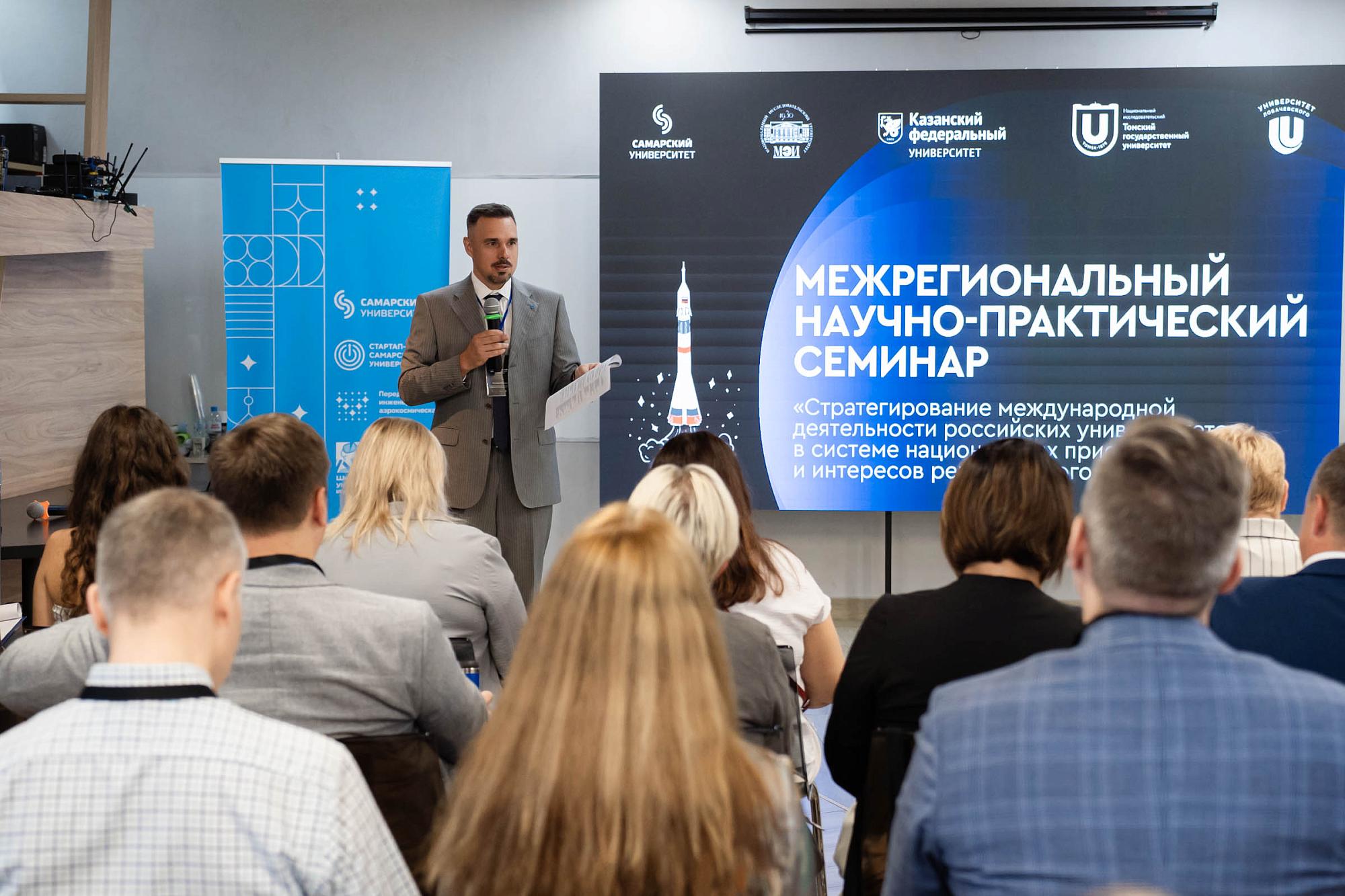
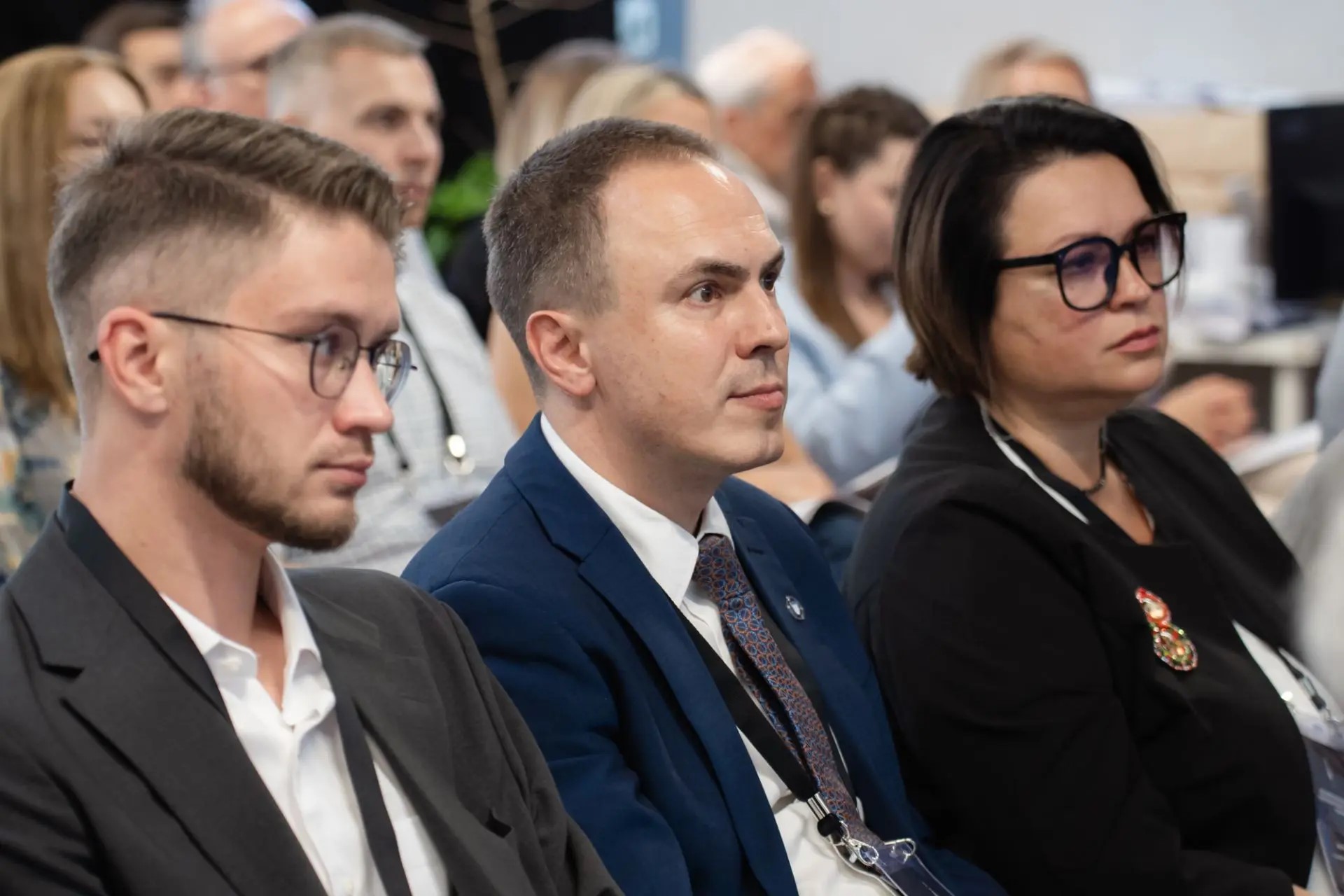
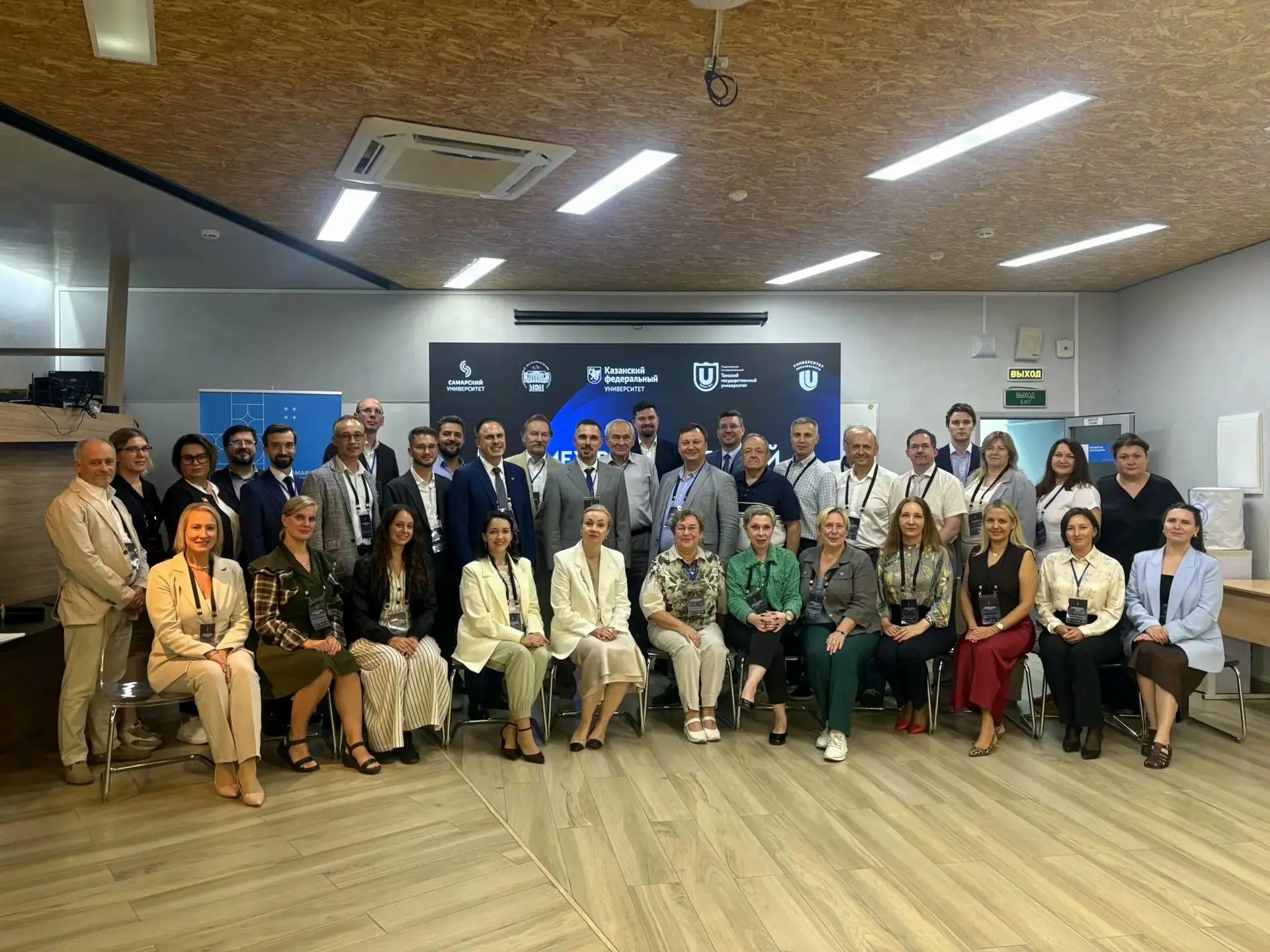
A delegation from Irkutsk National Research Technical University took part in the III Interregional Research and Practice Seminar " Strategic Planning of International Affairs in Russian Universities within the System of National Priorities and Regional Development Interests," which was held at Samara National Research University named after S.P. Korolev.
The event brought together more than 50 representatives of leading universities from Moscow, Irkutsk, Kazan, Tomsk, Tyumen, Nizhny Novgorod and other cities. This year the seminar was dedicated to the topic "International Affairs of Universities: Balancing Openness and Security." INRTU was represented by Vice-Rector for International Affairs Stepan Bykov, Senior Teacher of the Baikal School of BRICS Klimentiy Batoroev, and Project Manager of the Department for International Scientific and Educational Projects Konstantin Khobta.
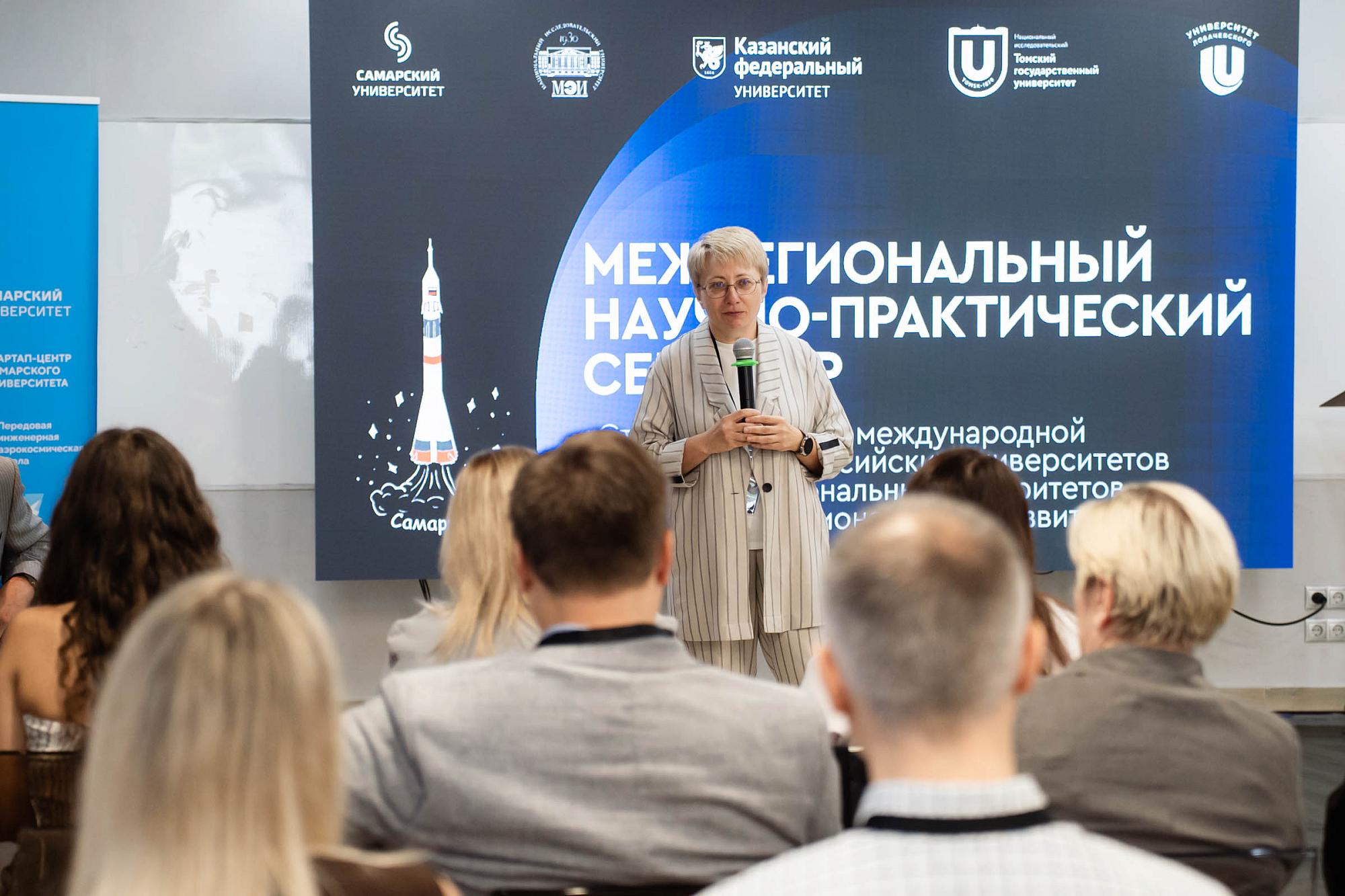
Vice-Rector of Samara University Viktoria Bolgova addressed the participants with a welcoming speech. She noted the importance of developing practical solutions in the context of the new foreign policy situation and called on her colleagues for an open dialogue.
On the first day of the seminar, a business program was held. International specialists from the country's leading universities delivered reports in two blocks: they shared their experience in migration policy and explained how universities build the management of international activities. INRTU representatives also presented their developments.
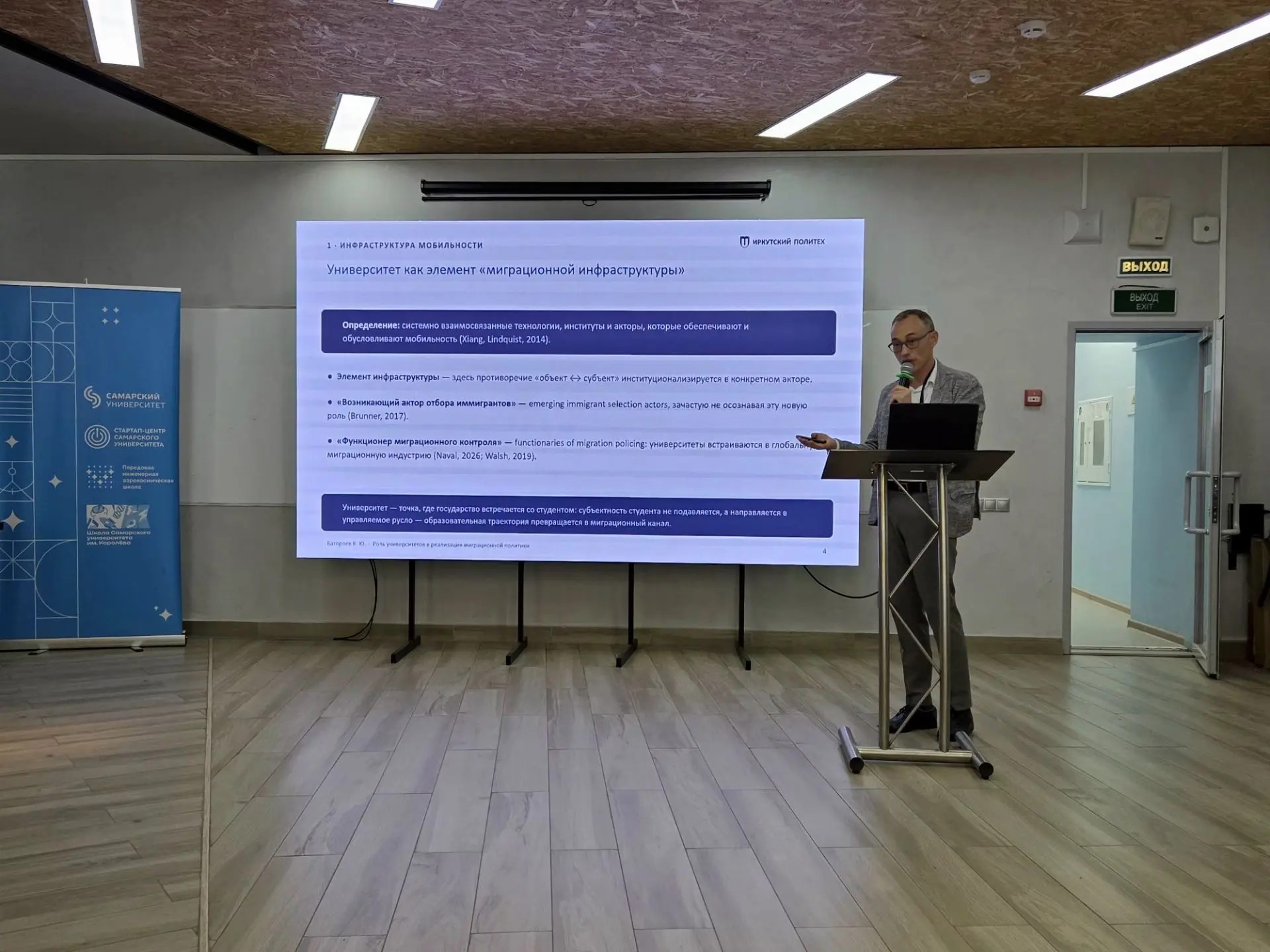
Klimentiy Batoroev's report "The Role of Universities in the Implementation of Migration Policy" sparked a lively discussion. The report presented a comparative analysis of foreign practices of participation and a detailed classification of the roles of universities in global migration processes, and also proposed specific mechanisms for adapting this experience to Russian realities.
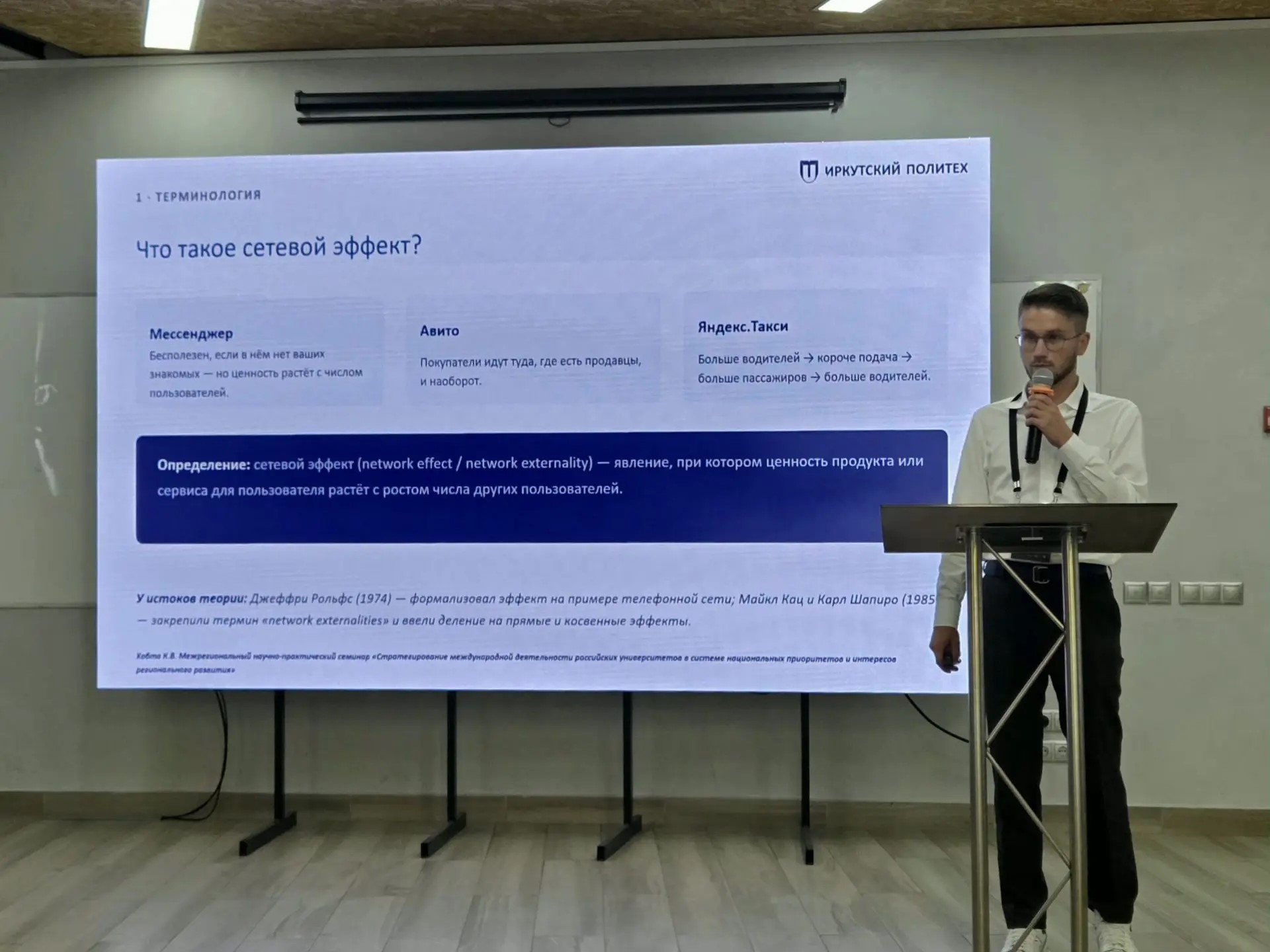
Project Manager of the Department for International Scientific and Educational Projects Konstantin Khobta delivered a report titled "The Role of Network Effects in Attracting International Students to Russian Universities." In his report, he showed that the value of education for an international student grows with the number and composition of other students around them – following the same logic as in messengers or taxi services. To increase the inflow of international students and improve its quality, universities should not simply increase the overall number of international students, but purposefully work with specific groups – by language, citizenship, and cultural proximity.
The central event of the program was an expert session organized by the Federal State Budgetary Institution "Interobrazovanie" on the instructions of the Ministry of Science and Higher Education of the Russian Federation. Over the course of 2 days, experts and seminar participants consistently worked through several key blocks.
Considerable attention was paid to discussing the draft National Qualifications Framework of the Russian Federation: its significance for international education was analyzed, and a comparison with foreign equivalents was carried out. In parallel, work was underway on model diplomas of higher education and a universal supplement for international students within the framework of the new education model – taking into account both Russian and international requirements for the formatting of documents.
A separate block was dedicated to strategizing the international activities of universities: participants examined practical cases, typical mistakes, mechanisms for ratifying strategies, and also searched for tools allowing them to maintain a balance between openness and security in the implementation of international projects. The final stage was a discussion on clarifying the priorities of the strategic development of international activities of Russian universities, taking into account regional development programs and the foreign policy situation, the result of which was formulated proposals for the Ministry of Science and Higher Education of the Russian Federation, regional executive authorities, and the university community.
The recommendations developed as a result of the session will be forwarded to the relevant departments of the Ministry of Science and Higher Education of the Russian Federation.