INRTU Archaeologists Confirm: Unique 7,500-Year-Old Miniature Fish Decoy Found in Priolkhonie
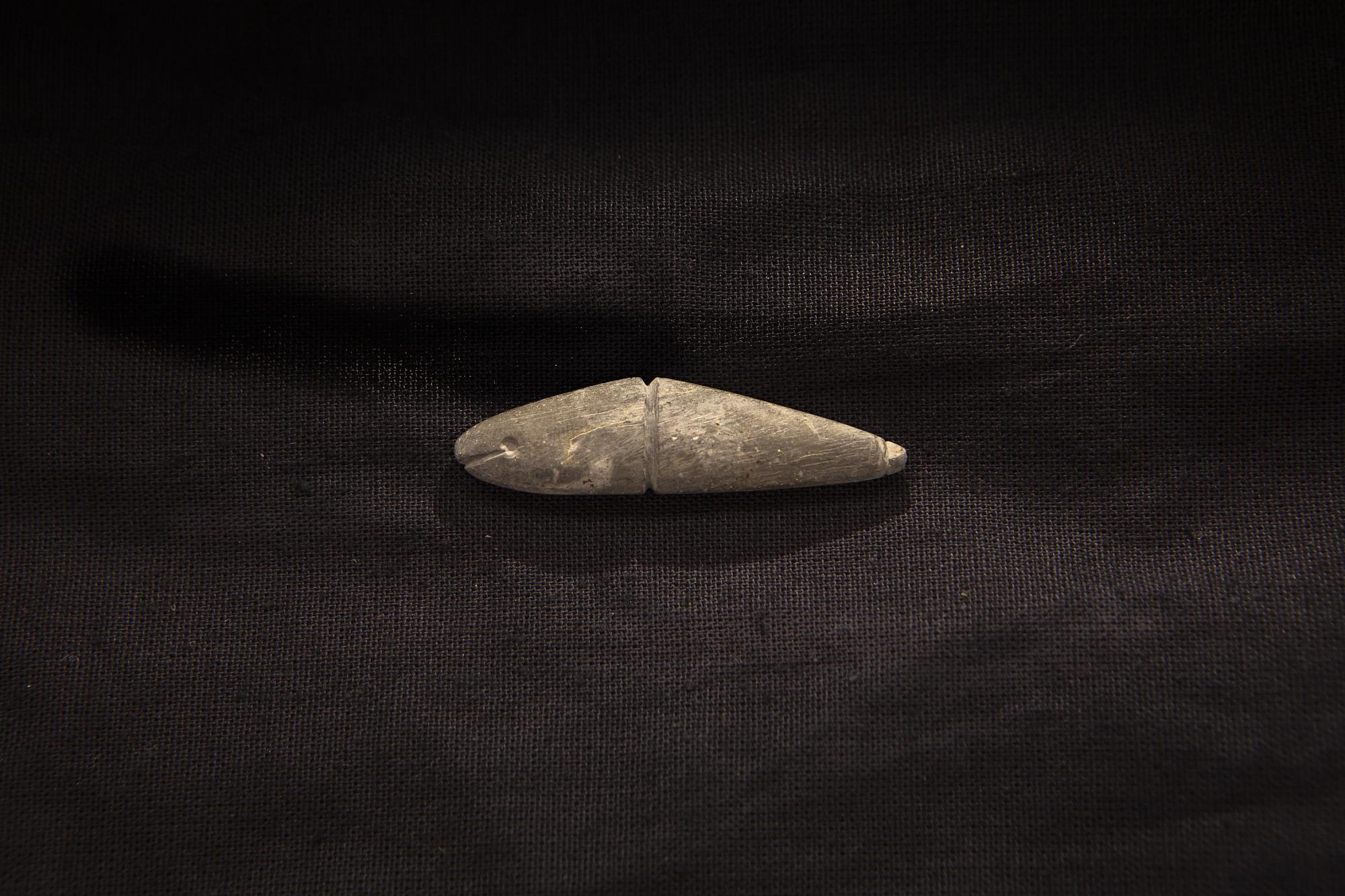
INRTU scientists Dmitrii Kichigin and Artur Kharinskii studied a miniature stone fish decoy used by the ancient inhabitants of Priolkhonie for fishing. They published an article about the unique artifact in the international peer-reviewed journal "Archaeology, Ethnology and Anthropology of Eurasia". The paper describes the fish figurine found in a tool kit for the first time.
The journal is the official publication of the Institute of Archaeology and Ethnography of the Siberian Branch of the Russian Academy of Sciences (Novosibirsk). It is indexed in the Russian Science Citation Index and the international Scopus and Web of Science databases, and is highly respected among scholars studying Eurasia. In 2026, the editors published an article by Professor Artur Kharinskii and Dmitrii Kichigin, researchers at the Research Laboratory of Archaeology, Paleoecology and Systems of Life of the Peoples of Northern Asia.
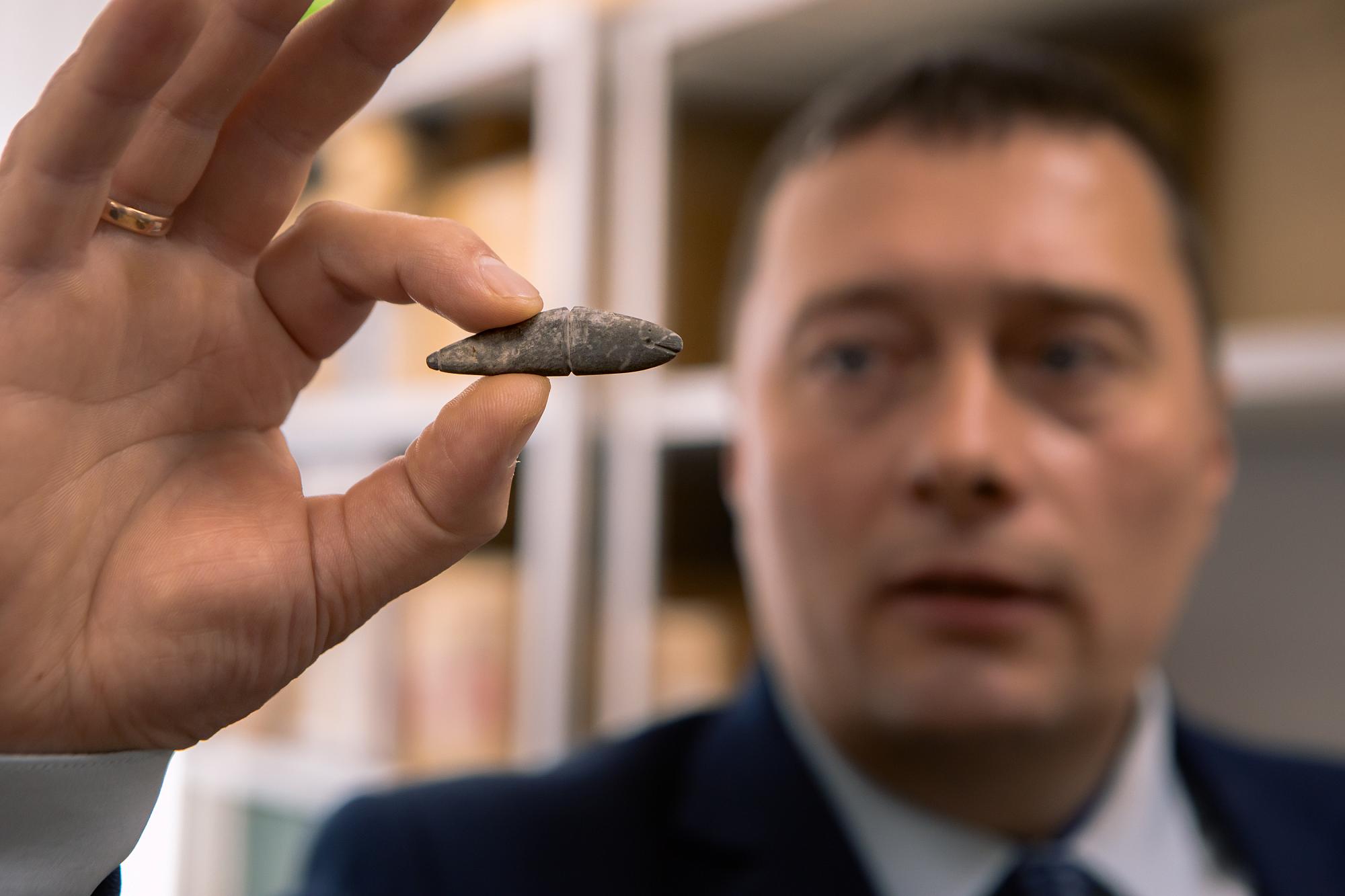
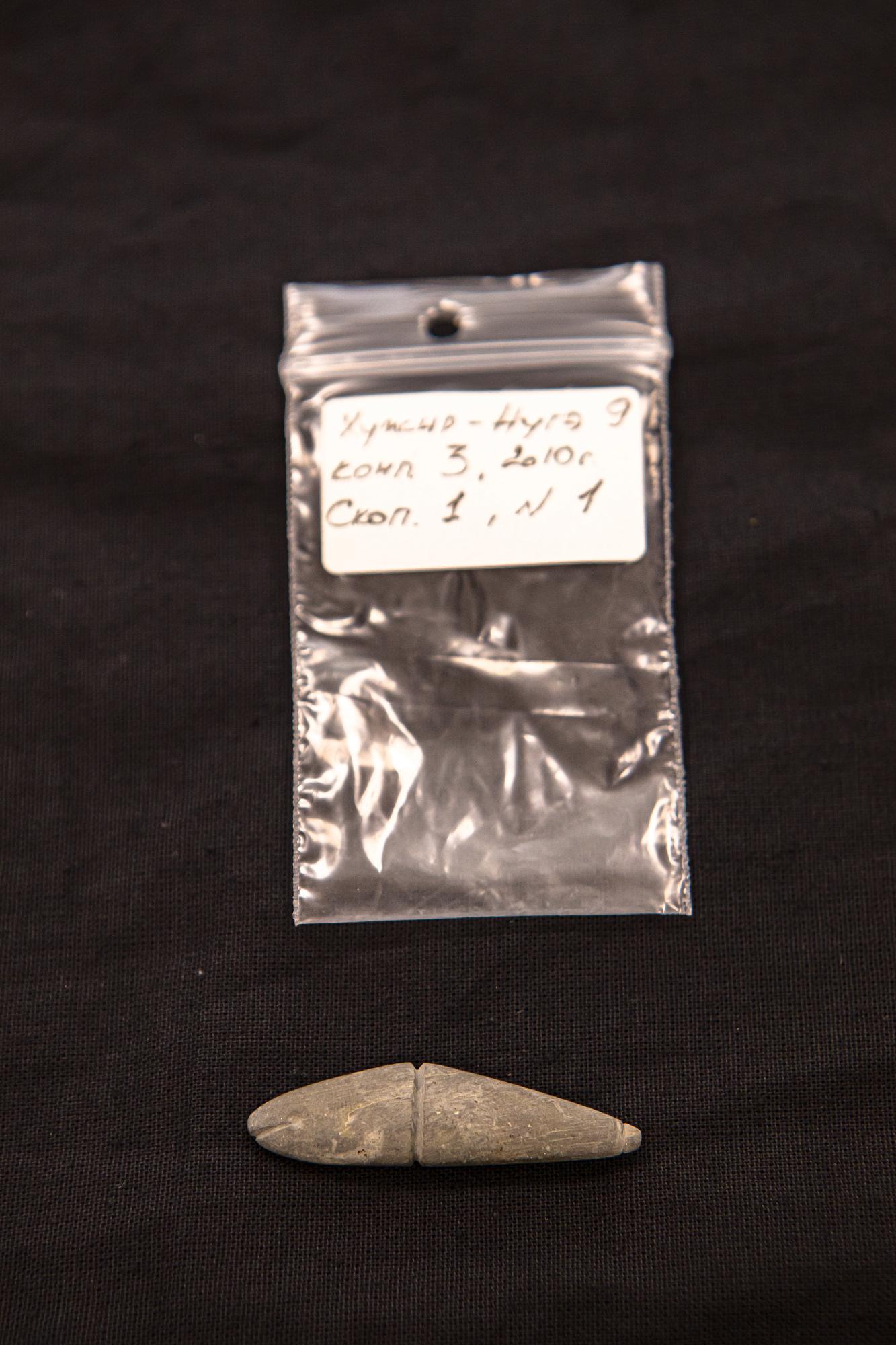
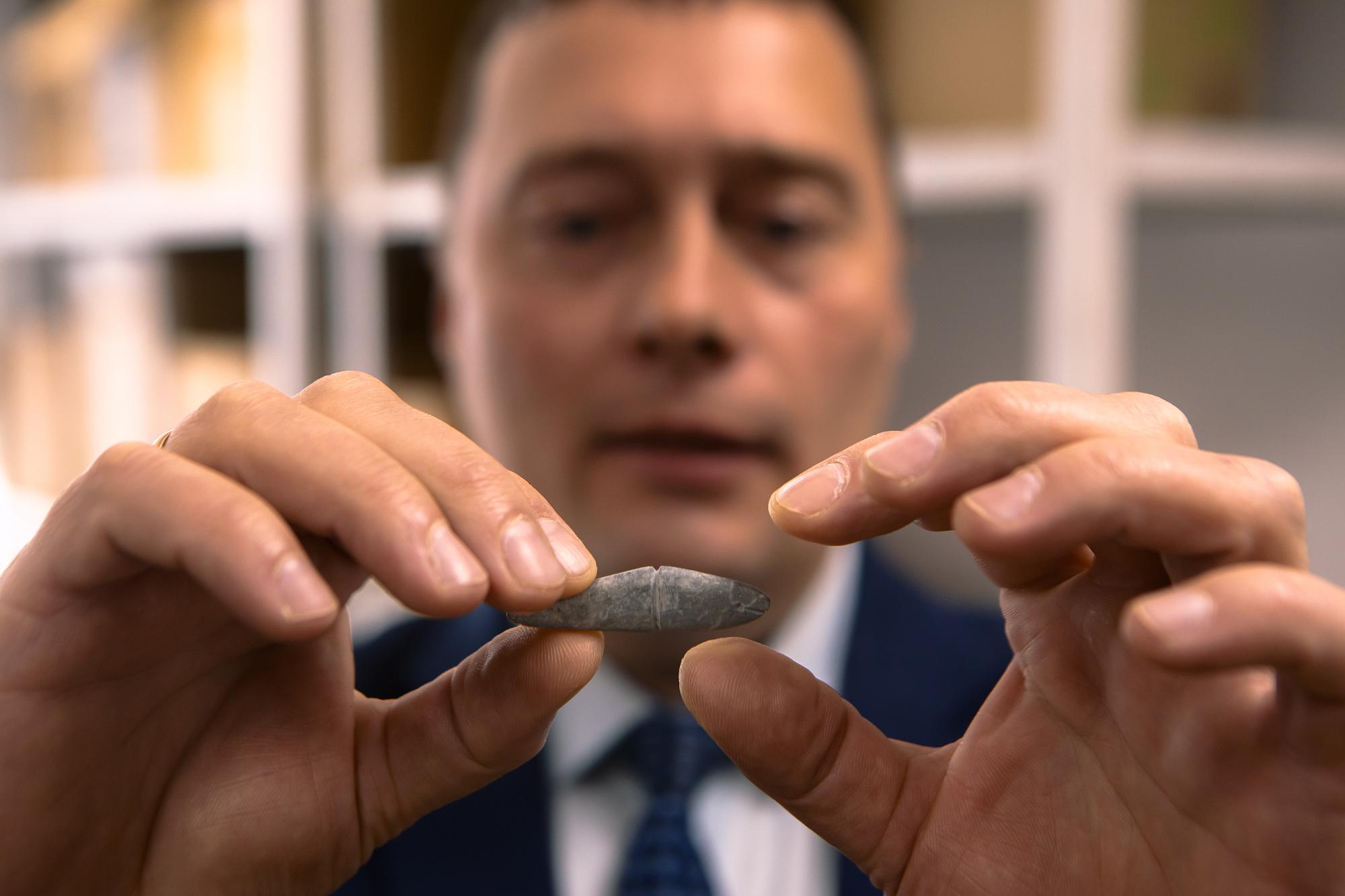
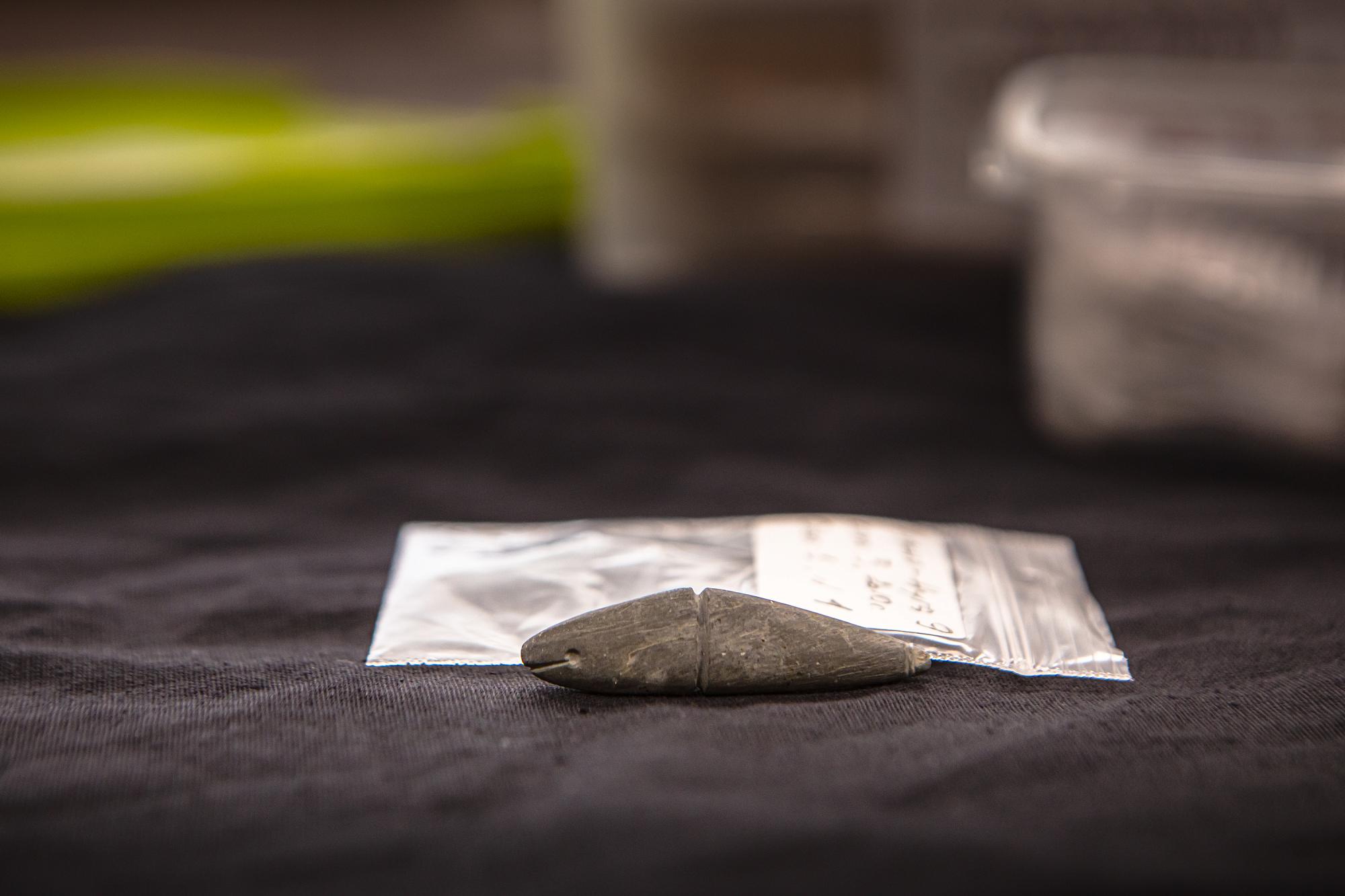
The paper focuses on the Khuzhir-Nuge-9 archaeological site in Priolkhonie. The site was discovered in 1991 by members of the Baikal Archaeological Construction-Rescue Expedition of Irkutsk State University. In 2010, INRTU Professor Artur Kharinskii carried out rescue archaeological work at the site. Of the five stone structures excavated, one (No. 3) turned out to be an Early Neolithic burial. Among the grave goods was a miniature stone fish measuring just 4.85 cm long.
More than 10 years later, the find was studied in detail by Dmitrii Kichigin, a young archaeologist and associate professor specializing in the Neolithic and Early Bronze Age of the Baikal region. According to the scientist, the artifact can hardly be classified as a modern-style fishing lure. Similar fish-shaped decoys were used by Siberia's indigenous peoples to fish for large predatory species in winter.

“The decoy is made of gray slate. The ancient craftsmen shaped its head, mouth and eyes. Shallow grooves near the tail, to which hook tackle or a small bright cloth was attached to attract large fish. The fish was lowered into an ice hole or open water, the catch swam close to the decoy, and then it was taken with a harpoon or spear. Notably, instead of modern fishing lines, threads made fr om animal sinew were used. In the 1970s, a theory was put forward that in ancient times such small fish served as clothing patches. We have demonstrated that it was indeed a decoy, not a clothing appliqué. In the Early Neolithic burial, it was found as part of a tool kit along with other finds: a scraper and cutting tools. For the Baikal region, the Khuzhir-Nuge-9 site is the only burial complex wh ere a miniature stone fish decoy has been found,” said Dmitrii Kichigin.
Along with the fish, 14 items were found in the burial's tool assemblage, including a bone artifact, a stone knife, a scraper, a bifacial inset, flakes and microblades. This makes burial No. 3 at the Khuzhir-Nuge-9 site one of the most informative burials of its era. Fragments of the deceased's skull and bones also survived, allowing radiocarbon dating to establish the burial's age at about 7,700 years.
Archaeologist Dmitrii Kichigin emphasizes that fish decoys, both whole and fragmented, made of stone and clay, are found at ancient sites along the entire coast of Lake Baikal. Their age ranges from the Early Neolithic to the Early Bronze Age; however, they are fairly large, reaching about 15-20 cm in length. Miniature stone fish (up to 6 cm long) had previously been found only at sites in Priolkhonie, and this is the first time such an artifact has been found among burial goods (burial No. 3 at Khuzhir-Nuge-9).
Photos: INRTU press service