INRTU’s Baikal Beasts Reach the Finals of the International Battle of Robots Championship in Kazan
INRTU’s Baikal Beasts competed in the finals of the fourth season of the international Battle of Robots championship. The team were the only representatives of the Irkutsk region at the major event.
The final bouts of the Battle of Robots championship took place on October 30 and 31 at the Kazan Expo International Exhibition Centre, as part of the international Kazan Digital Week forum (Kazan Digital Expo). The project is coordinated by Russia’s Ministry of Digital Development, Communications and Mass Media and run by the autonomous non-profit organization Engineers and Robots.
The fourth season attracted 313 entries from 16 countries. A record 144 teams competed at the start of the tournament. Teams from Russia and 10 other countries took part in the 2026 Battle of Robots. Following the qualifying rounds, 30 Russian teams and six international teams advanced to the finals, representing China, India, Brazil and other countries. The overall winners in the 110 kg category were St Petersburg’s Daddy Bots with their robot Papochka (“Daddy”), while Moscow’s SonBots took the mini-robot title in the under-1.5 kg category with their robot Synochek (“Little Son”).
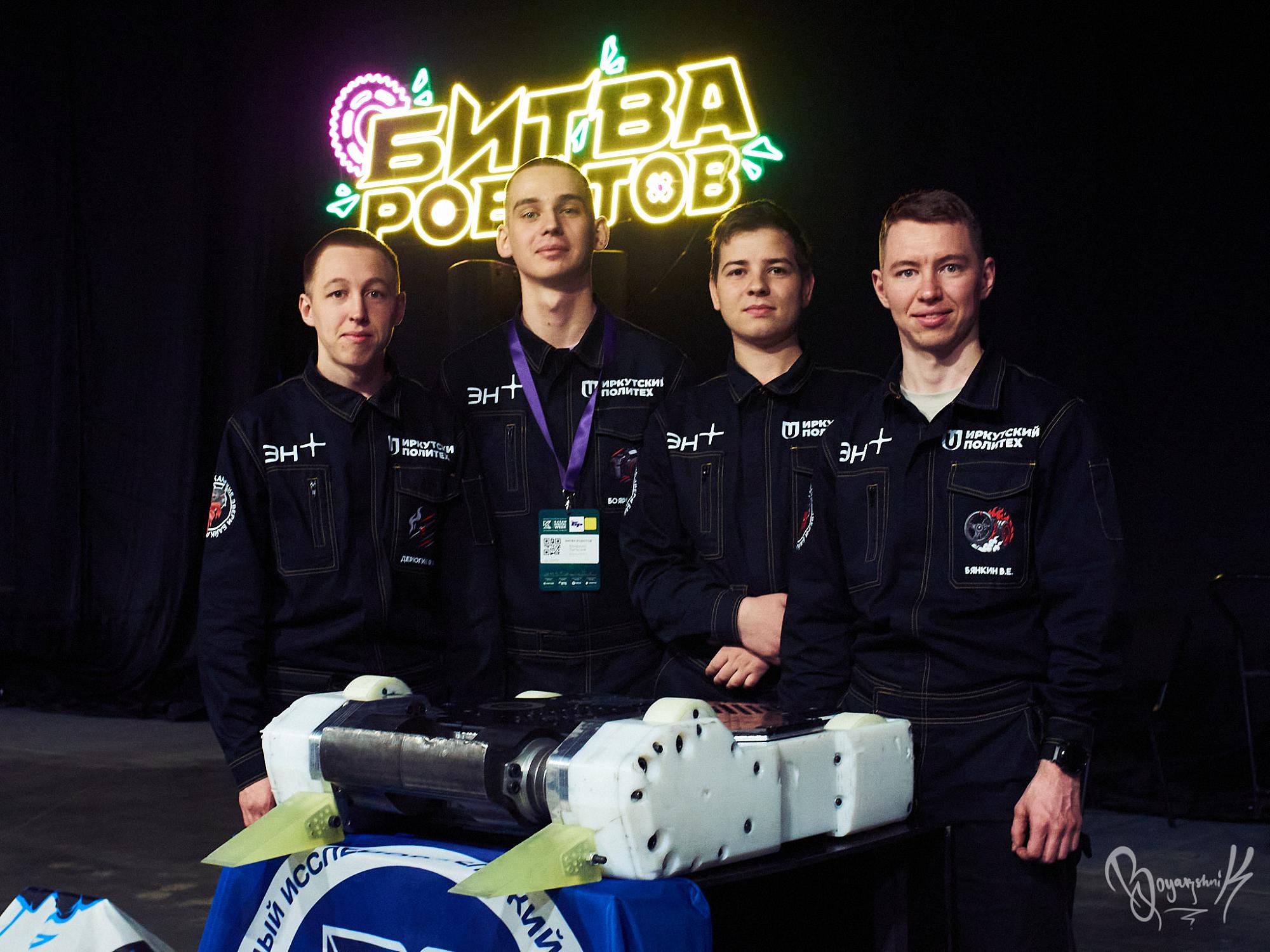
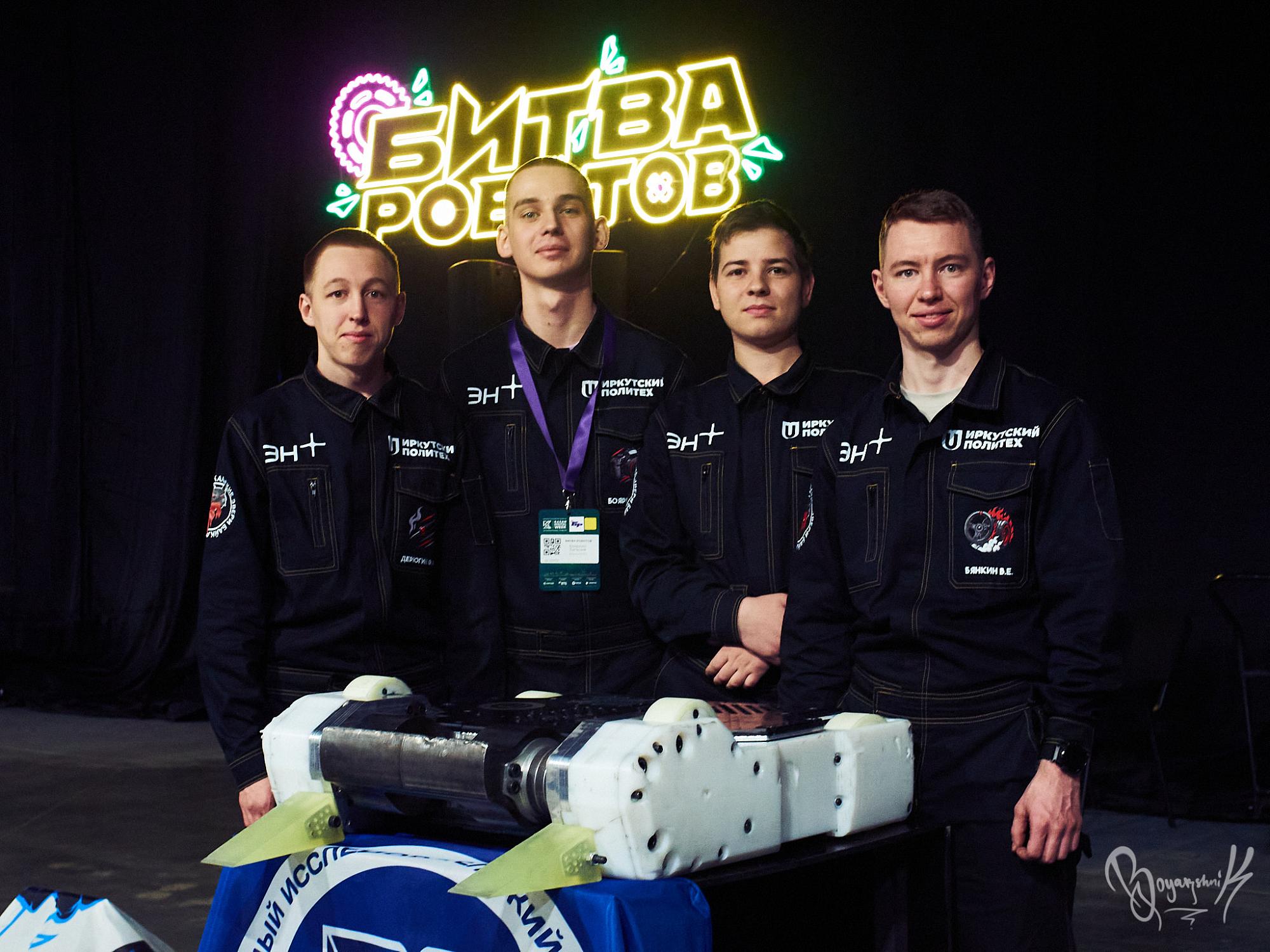
The INRTU team competing in the finals comprised senior lecturer Vladislav Byankin, master’s student Evgeny Boyarkin, and undergraduates Arseny Gorshkov and Vyacheslav Byankin. The team had previously competed in the Battle of Robots in the under-1.5 kg and under-110 kg categories in 2024 and 2025.
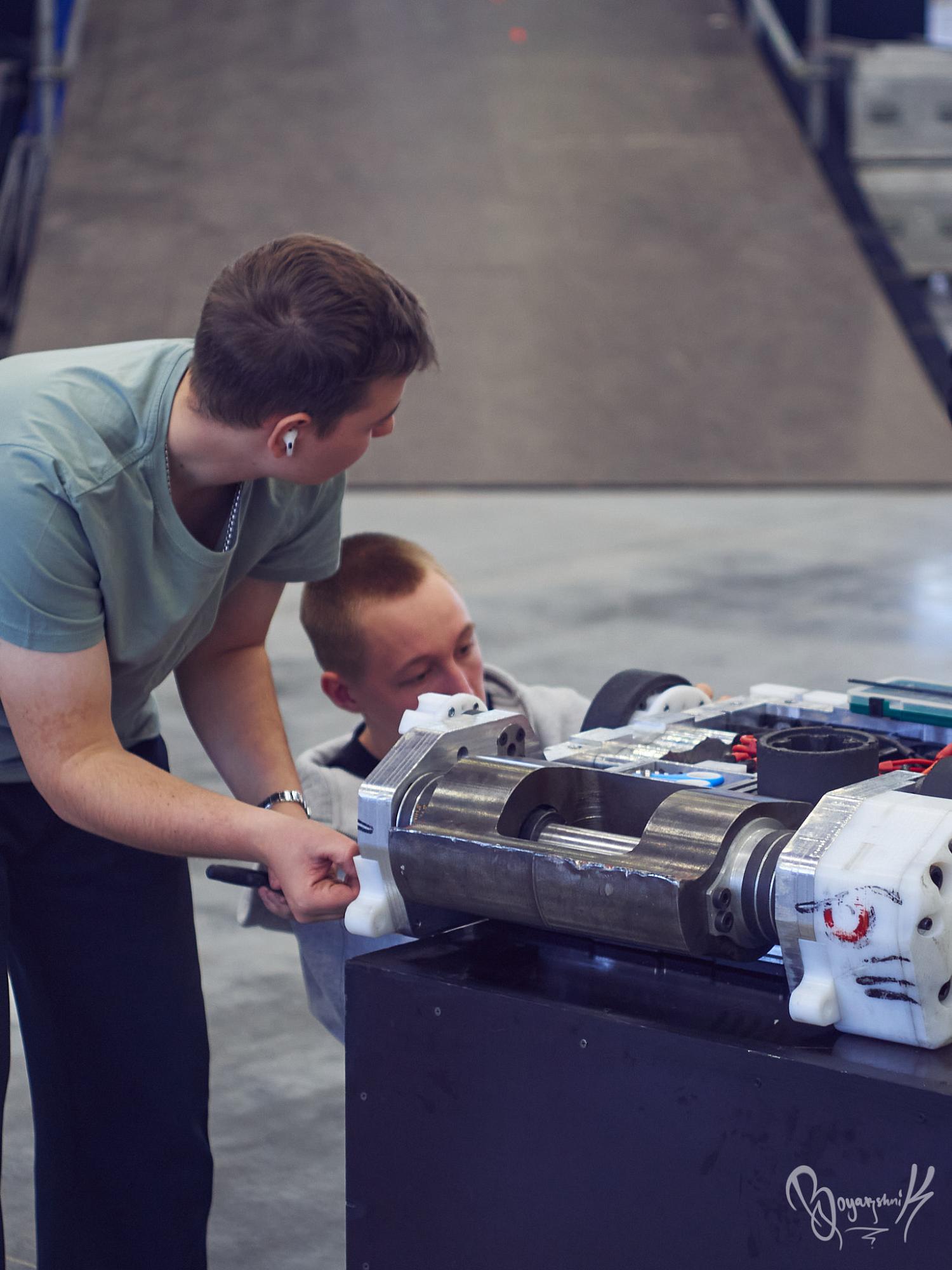
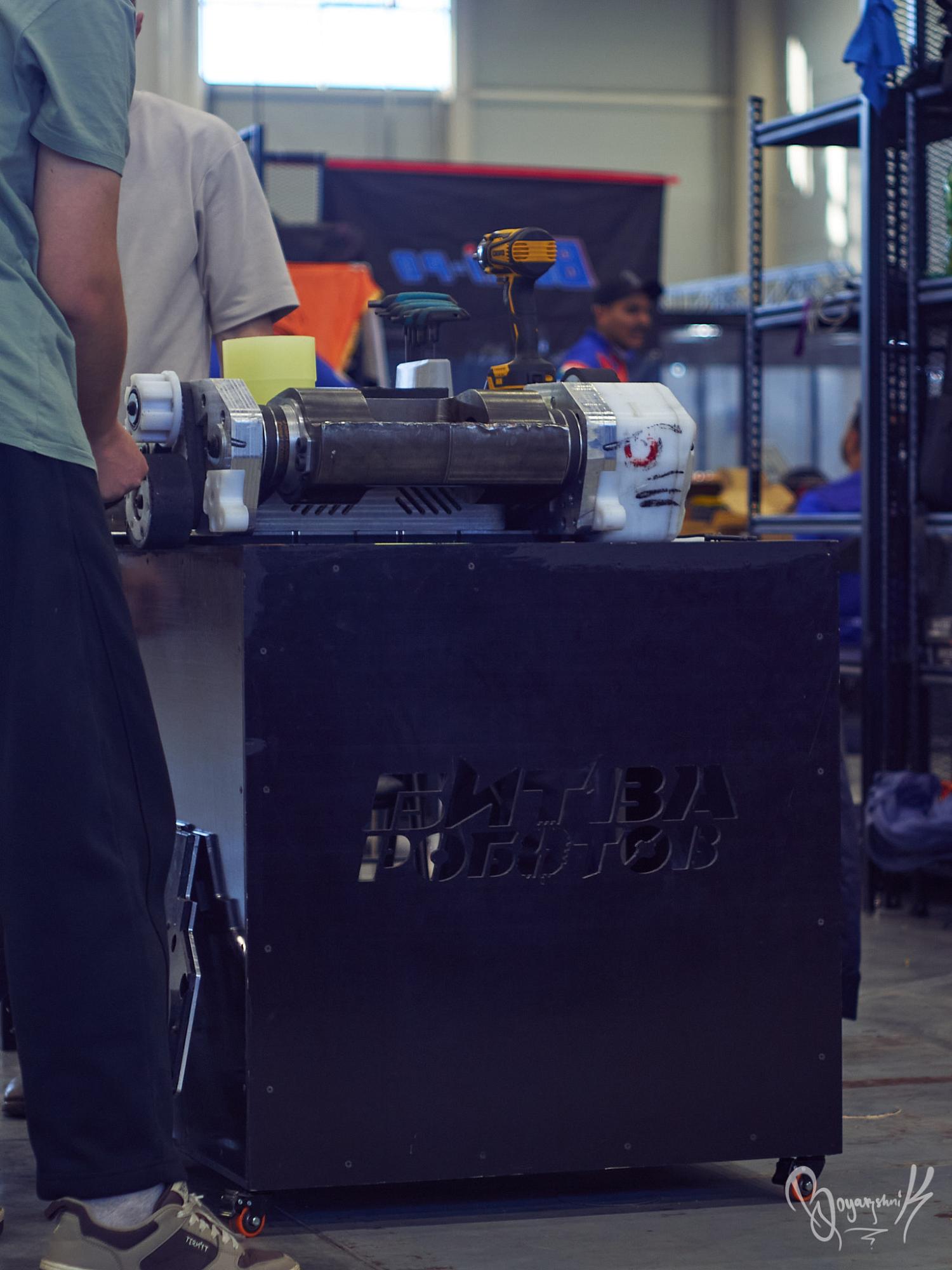
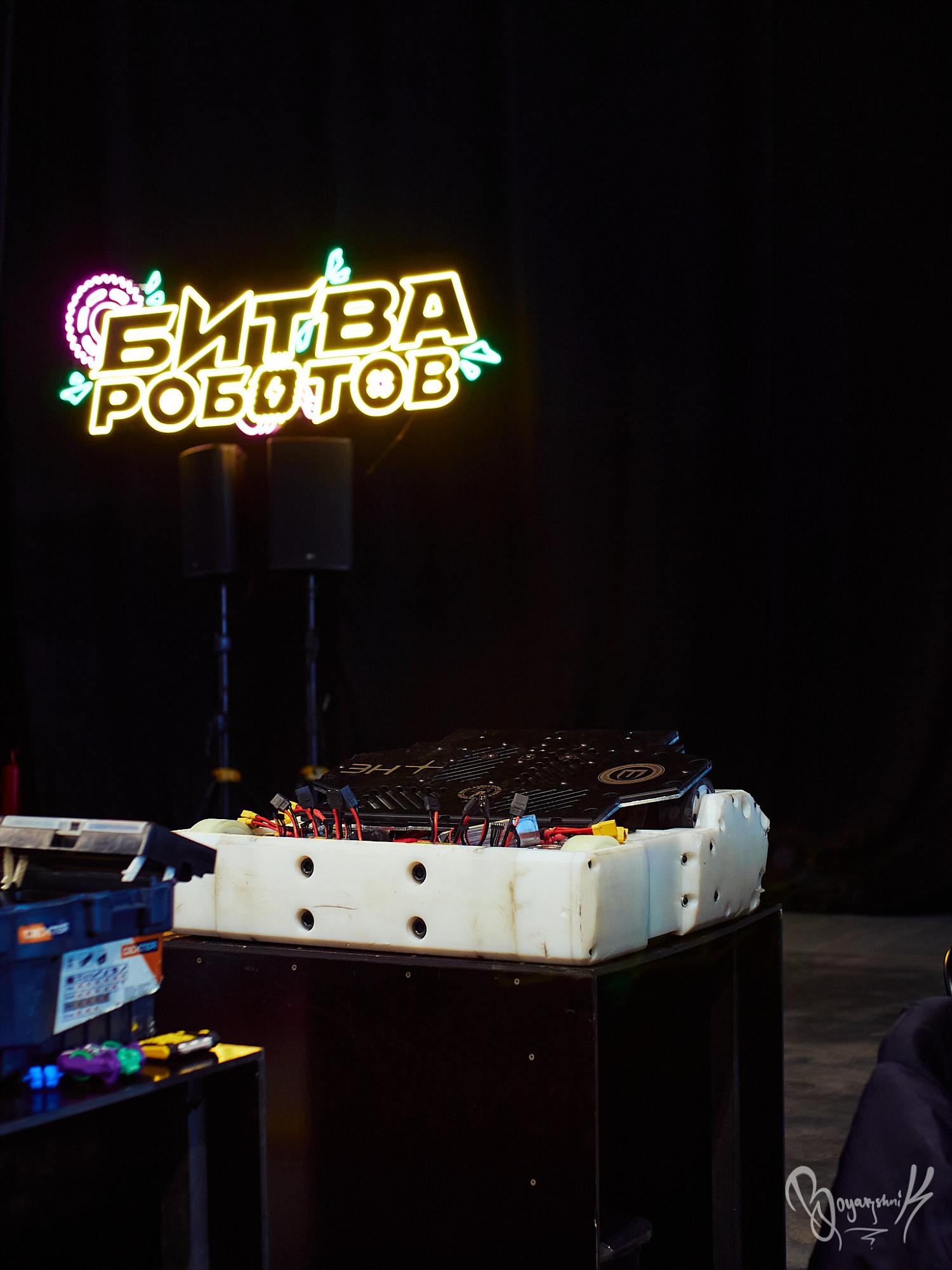
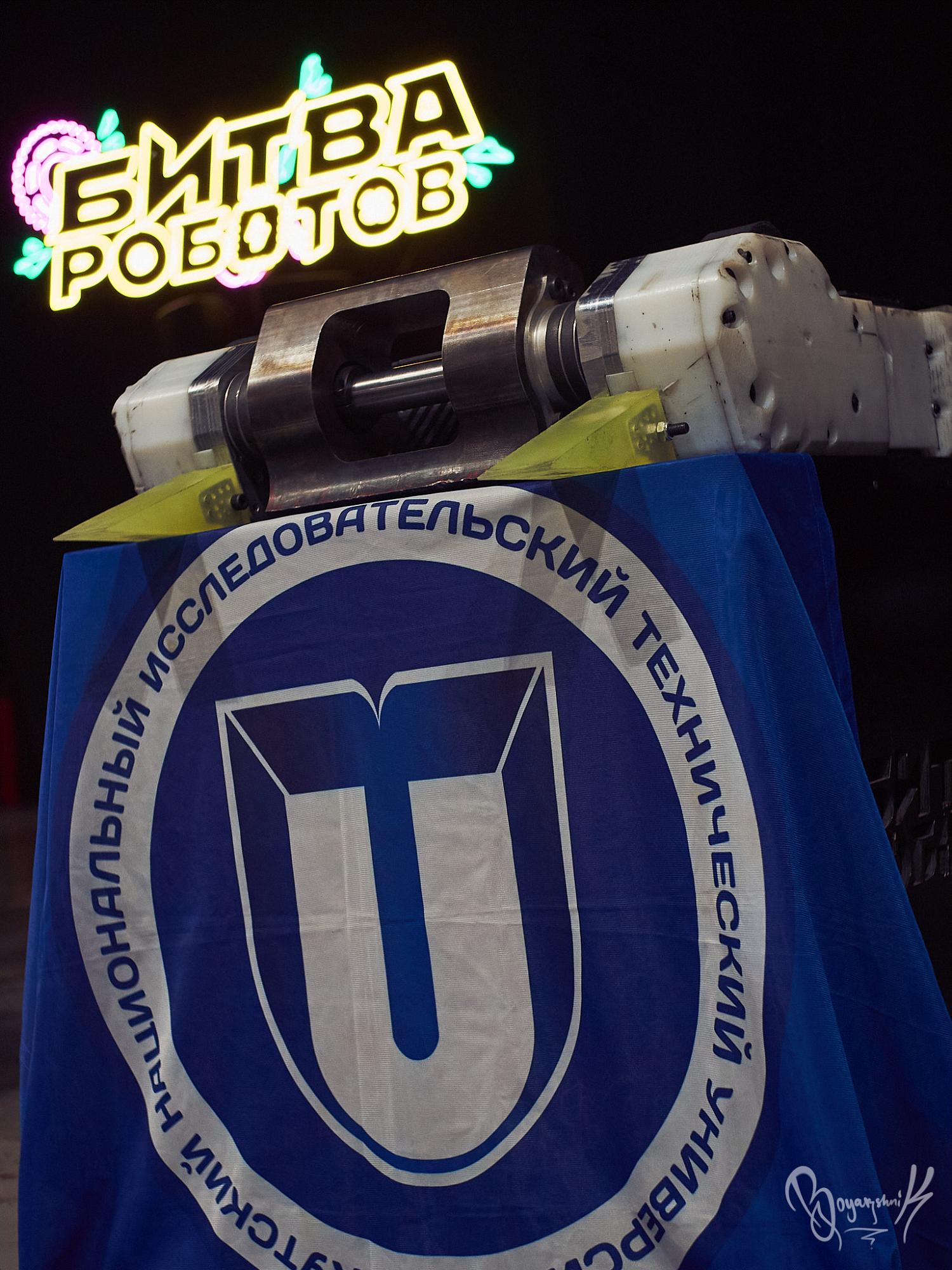
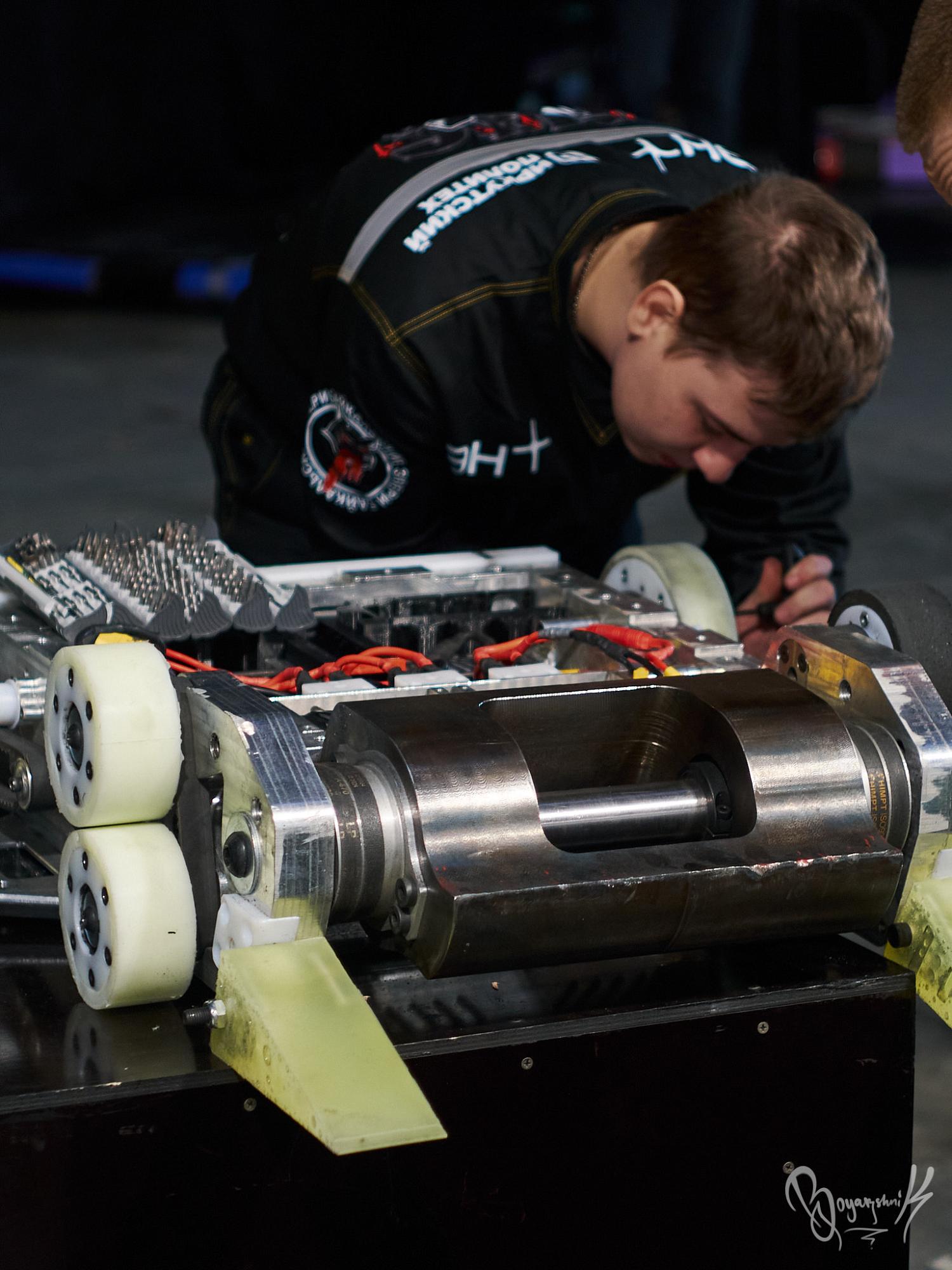
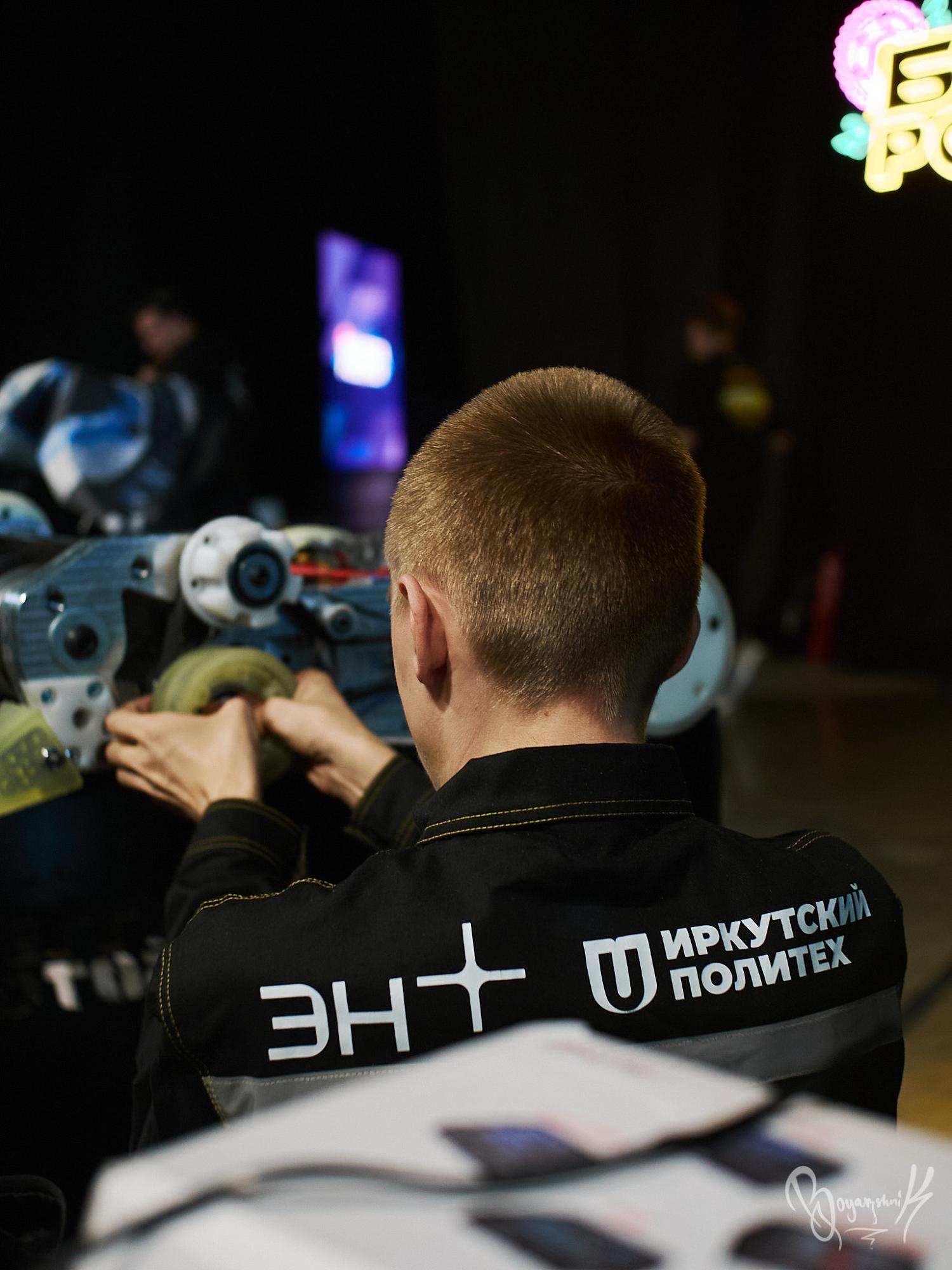
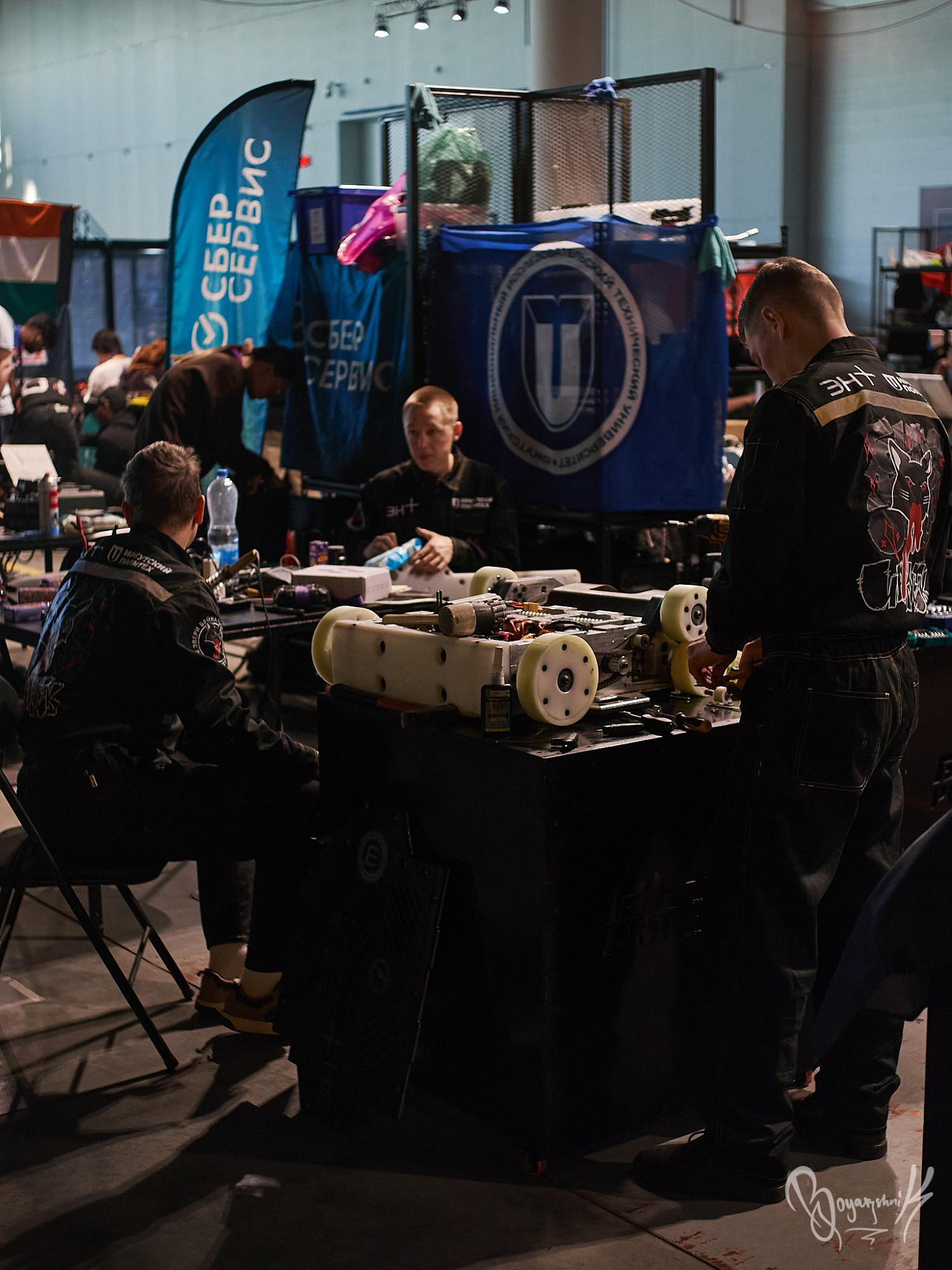
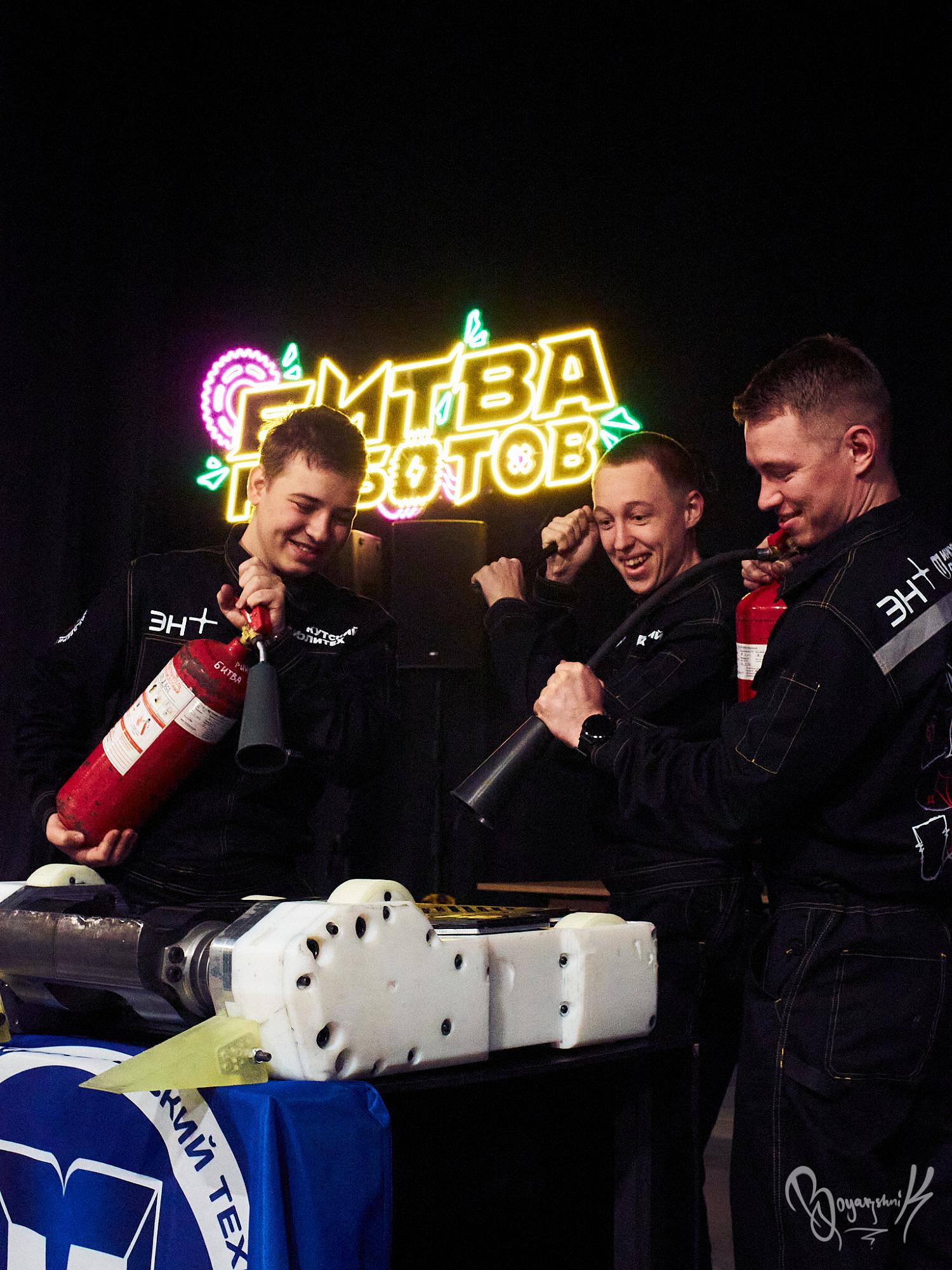
This season, the INRTU team showcased an upgraded version of its Babr Monster robot in the under-110 kg category. The machine has six wheels and a 26 kg steel drum spinner capable of reaching 6,500 rpm. Its frame is made of aluminum, while its armor is 110 mm-thick ultra-high-molecular-weight polyethylene. The Babr Monster has a top speed of 35 km/h. After analyzing mistakes made the previous year, the team designed new components, which were manufactured at the INRTU Technopark. With support from EN+ Hydro, Baikal Beasts further upgraded the robot’s electronics, installed more powerful batteries and replaced the motors in its drivetrain.
Vladislav Byankin, acting captain of the INRTU team, shared his impressions of the international championship final:

“The draw paired us with an experienced Indian team, PRIXX Robotics, and its robot SARKHEL. They’ve competed in the Battle of Robots several times and have always shown a high level of preparation. We knew we were in for a tough fight. It was a tense bout. We tried to make the most of our greater maneuverability and, for the most part, managed to dodge SARKHEL’s attacks and rapid charges. After one of our powerful blows, the PRIXX Robotics machine was left motionless at the edge of the arena. The impact also disabled our spinner, leaving us unable to attack for the rest of the fight.
The countdown began for the opposing team because their robot was immobilized. With just three seconds left, SARKHEL’s pilot managed to get the machine moving again and avoid defeat on those grounds. We kept fighting. In the end, our Babr Monster sustained heavy damage to its drivetrain and stopped moving. The judges ruled that we had been knocked out.”
According to Vladislav Byankin, the final bout showed that the Babr Monster still needs to be more reliable:
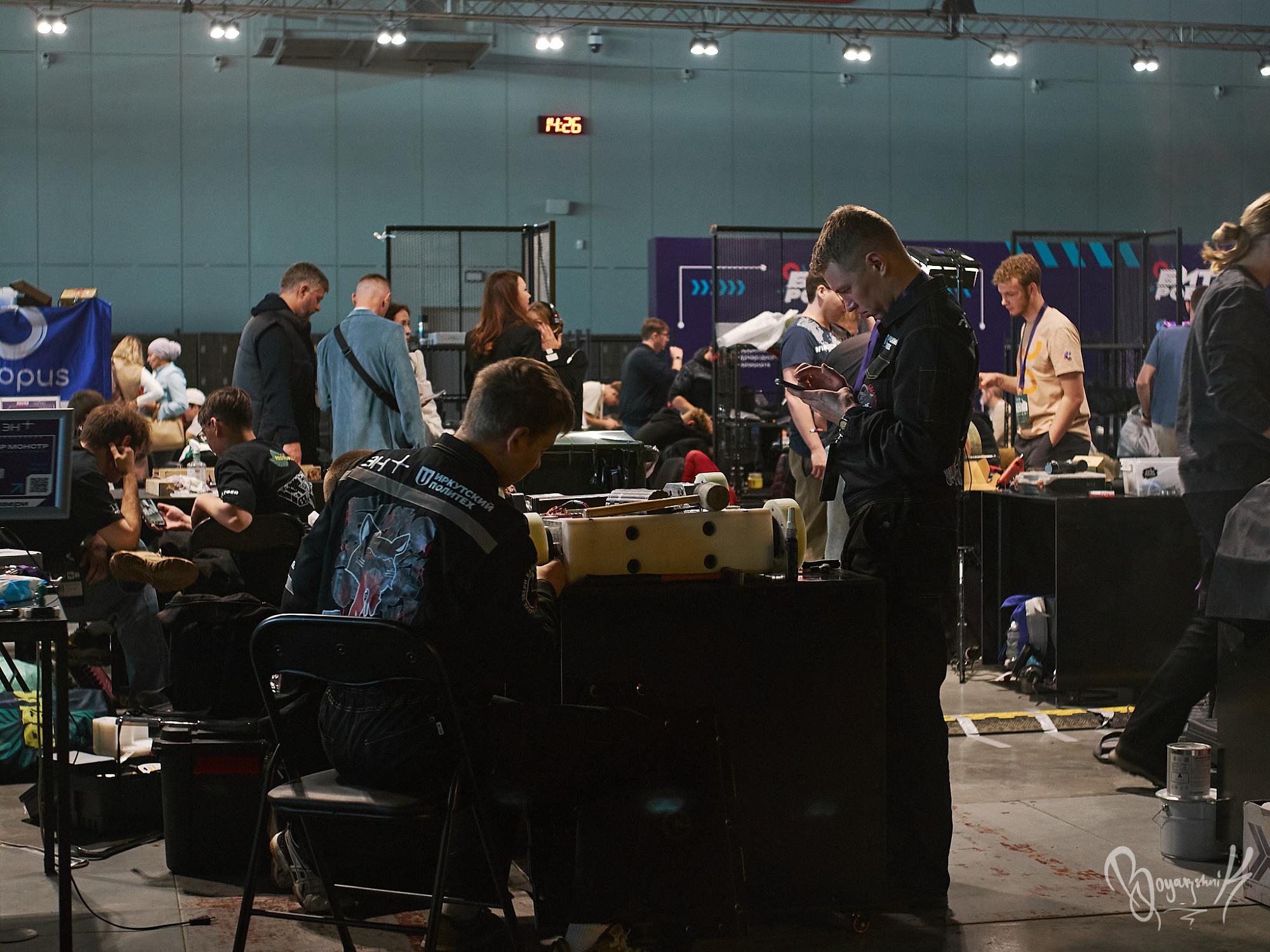
“That said, we had virtually no complaints about the robot’s power or mobility. All the electronics held up under pressure, didn’t overheat and remained in working order. We checked everything in the pit area. The bout exposed some weaknesses in our design. We now have a better idea of what needs work to make the Babr Monster an even more formidable opponent. Competitions like this give us the chance to take on strong teams, gain combat experience and identify shortcomings in our robot. We’ll prepare for our next battle and aim to do better than we did this year.”
On behalf of the entire Baikal Beasts team, Vladislav Byankin thanked INRTU for providing workspace to build the robot and financial support to purchase components and materials. EN+ Hydro also provided funding to help build and upgrade the robot.