INRTU Joins International Effort to Advance Bastnaesite Enrichment Using Ultrasound
Associate Professor Aleksandr Burdonov and PhD student Wang Aiqing from the Flotation and Reagent Chemistry Laboratory have co-authored a publication in the prestigious Chemical Engineering Journal (Q1, Scopus). Their co-authors are researchers from the Inner Mongolia University of Science and Technology, Baotou, China. The article, written in English, focuses on processing bastnaesite to extract rare-earth metals vital for the renewable energy sector, electronics, and other high-tech industries. This research was carried out as part of the Priority 2030 Program.
Chemical Engineering Journal features work in the areas of applied biomaterials and biotechnology, new materials with demonstrated practical applications, chemical reactions, and sustainability. Its key citation metrics, the Impact Factor and the CiteScore, stand at 13.2 and 20.6, respectively.
The article points out that the complex mineralogy of bastnaesite, its natural association with minerals like fluorite, calcite, dolomite, and barite, makes it difficult to extract the valuable rare earth elements, the demand for which continues to rise. To address this, the team is refining the flotation process by testing different reagent combinations and their collecting efficiency, as well as optimizing temperature conditions. However, their work encounters two significant hurdles: high-temperature processes are energy-intensive, and custom reagent synthesis is financially costly. Consequently, the development of resource-efficient technologies has become a critical focus of their research.
As a promising solution, the international research team proposes ultrasonic treatment. This method increases the surface reactivity of bastnaesite and improves compound efficiency. To confirm the mechanism of action, they conducted a series of analytical verifications, including solution chemistry calculations, conductivity tests, zeta potential measurements, analyses of complexation and precipitation reactions and others.

"The experiment utilized bastnaesite from the Weishanhu rare earth ore mine in Shandong province. This was a sample with a purity exceeding 98%, obtained after manual impurity removal, crushing, grinding in a porcelain ball mill, magnetic separation, and repeated purification. The flotation was carried out with pre-sieved bastnaesite particles in the range of 38-74 micrometers.
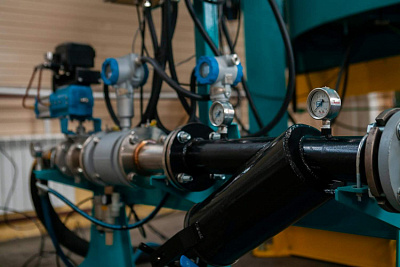
For the mineral enrichment, ultrasound-treated octyl hydroxamic acid was applied. As a result of the study, the efficacy of oxazolidinone as a collector was proven. The ultrasonic treatment generates micro- and nanobubbles in the flotation chambers and increases the hydrophobicity of the particles," explained Aleksandr Burdonov.
Support for the publication of the research results was provided by the National Natural Science Foundation of China (NSFC), the National Key Research and Development Program of China, the Inner Mongolia Outstanding Youth Science Fund, and other funding bodies.
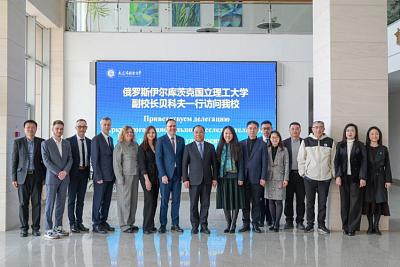
"We are also submitting applications for competitions and expect to receive a grant from the Russian Science Foundation. This upcoming summer, we are looking forward to hosting PhD students from Baotou in Irkutsk for a school on raw materials beneficiation. This will be a return visit from our colleagues. In September, we completed an internship at the Inner Mongolia University of Science and Technology, focusing on the topic of the published article," added Alexander Burdonov.Photo credit: INRTU Press Service