INRTU Develops Autonomous LIS-KZB Device for Underground Surveyors to Monitor Safety Clearances
An autonomous device to monitor safety clearances - LIS-KZB (LIS Kazbek), has been created for underground mine surveyors by Semen Gridnev, chief designer at INRTU Center for Surveying and Geodesic Innovations.
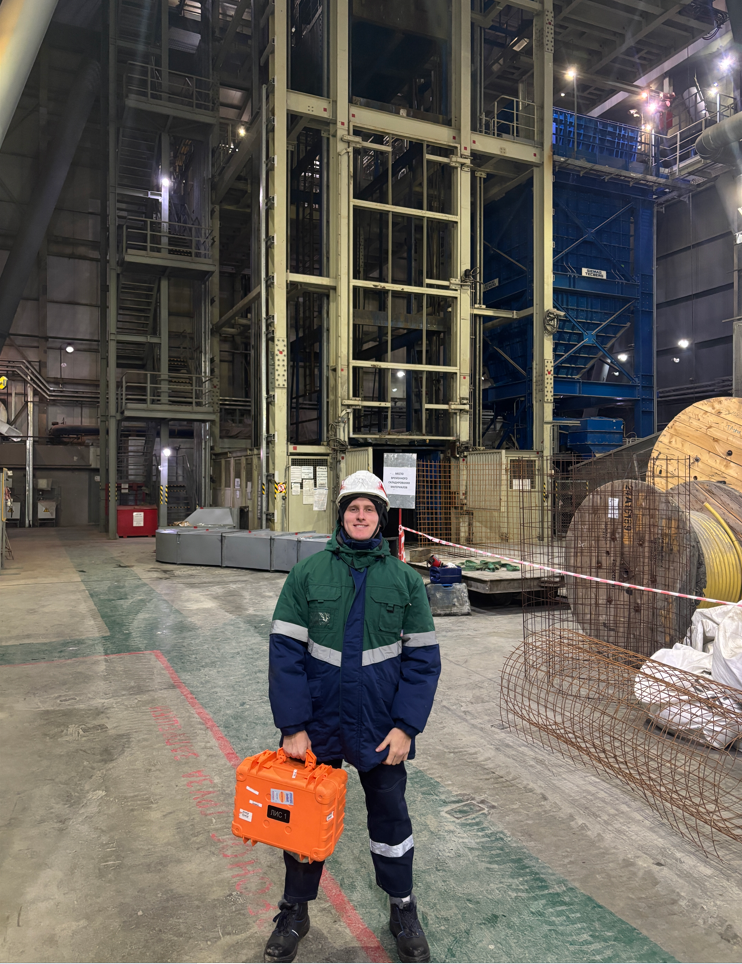
Surveyors from the Siberian Meridian innovative company affiliated with INRTU successfully performed safety clearance measurements in one of the deepest shafts in Eurasia (2 km) using the unique LIS-KZB system. The device proved its efficiency even in harsh on-site conditions, such as dense fog and intense water seepage.
Semen Gridnev underlines that the autonomous LIS-KZB scanning system stands alone in Russia for its ability to conduct measurements on the go, eliminating the need to stop the personnel cage during its movement:
"What sets this instrument apart is its use of a built-in inertial navigation system for point cloud alignment. This method ensures a guaranteed outcome, in contrast to SLAM algorithms that fail to perform accurately in shafts and tunnels with repeating cross-sectional geometries."
Monitoring safety gaps in vertical and inclined shafts, along with transport tunnels used by hoist vessels and mine trains, is a critical industrial safety requirement in underground mining and infrastructure maintenance. As per the order of Rostechnadzor, instrumental verification of the correct positioning of the hoist tower, guide sheaves, clearances between the hoisting vessels and the shaft lining, guides, and other components is to be carried out by the surveyor of the section at least once per year.
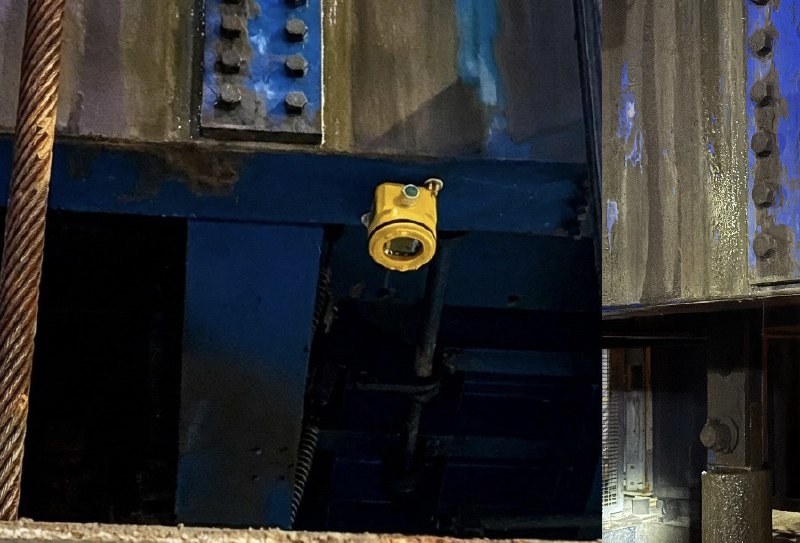
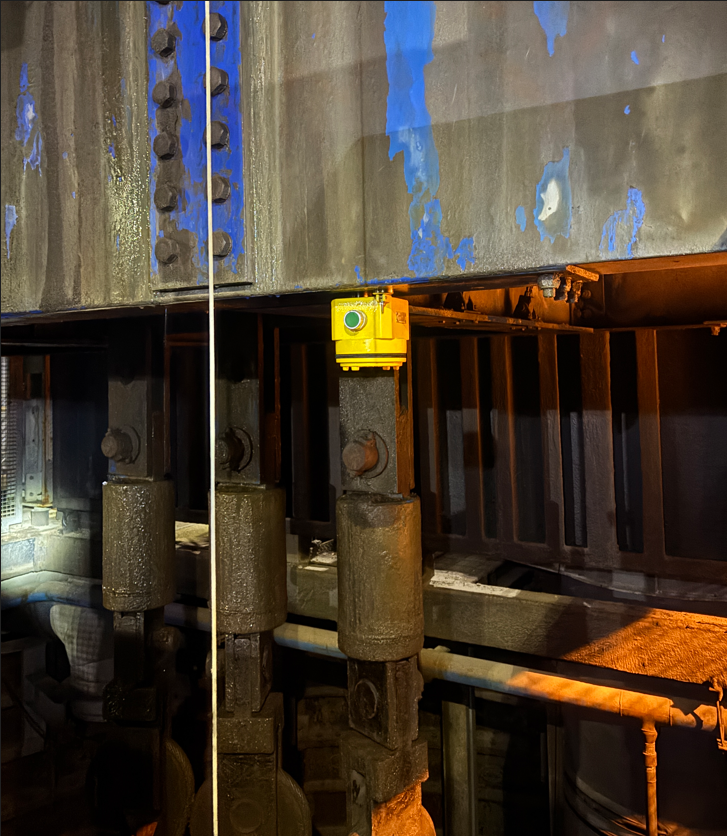
When presenting the LIS-KZB system's working principles, the chief designer explained that the device is magnetically attached beneath the hoisting vessel and performs laser scanning of the shaft while in motion. A powerful software suite then carries out smoothing and correction of the inertial system drift, generates a high-precision 3D point cloud, and displays it in a user-friendly interface.
Adding to its utility, the display module lets operators watch a live video stream of the scan, export data segments as LAS files, and interact with the 3D point cloud using various filters (intensity, height, normals, etc.). For seamless integration into existing workflows, the point clouds are readily importable into software such as NanoCAD and ReCap, wh ere they can be used for critical follow-on analysis like hoisting vessel clearances modeling, dimensioning, etc.
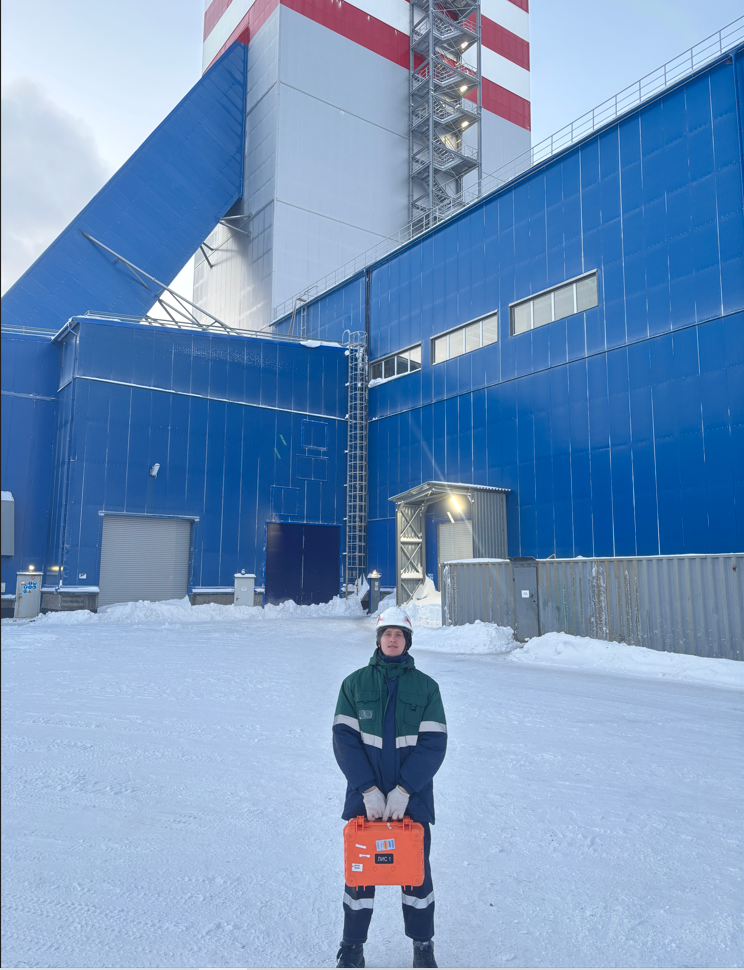
Among the key advantages of the autonomous device, Semen Gridnev highlights its speed, as it operates at any hoisting velocity, up to 8 m/s. Its autonomy allows all operations to be performed automatically, without an operator and without halting shaft operations. The reliability of LIS-KZB is ensured by a reinforced casing (walls up to 1 cm thick) and an IP68 protection rating, guaranteeing performance in extreme conditions (dust, moisture, chemical agents).
The equipment lineup includes: LIS-KZB 400 - measurement range up to 400 meters; LIS-KZB 200 - range up to 200 meters; LIS-KZB 60 - range up to 60 meters (included in the LIS-1M mine profiling station kit and its explosion-proof modification LIS-1M-RO).
According to the developer, the flagship LIS-KZB 400 model has already demonstrated outstanding field performance, delivering accurate data with significant time savings.
Photos by Danil Kirikov